
How to Store Appliances in a Storage Unit? Full Guide
Yes, you can safely store appliances in a storage unit if you prepare them the right way. Many people use storage units for appliances during moving or when they need extra space. The key is to keep them clean, dry, and well packed before storing. This helps protect them from damage and keeps them in good condition.
Appliances like refrigerators, washing machines, and microwaves can get damaged if they are stored without care. Moisture, dust, and bad smells are common problems when things are not prepared properly. A little effort before storage can save you from repairs later. Simple steps can make a big difference in keeping your appliances safe.
It is also important to choose the right storage unit for better protection. A clean and dry space helps prevent rust and mold. Placing appliances the right way inside the unit also keeps them safe. With proper care, your appliances will stay in good shape until you need them again.
Appliance Storage Preparation Overview
| Appliance Type | Preparation Needed | Key Tip | Risk if Ignored |
| Refrigerator | Clean and dry fully | Keep door slightly open | Bad smell and mold |
| Washing Machine | Drain water and dry | Leave door open | Moisture damage |
| Dryer | Clean lint filter | Cover properly | Dust buildup |
| Microwave | Clean inside and outside | Pack in a box | Scratches and dust |
| Dishwasher | Drain water and clean | Let it dry fully | Mold and odor |
Storing Appliances in a Storage Unit
You can safely store appliances in a storage unit if you prepare them properly before placing them inside. Many people choose this option when moving or when they need extra space at home. Taking a few simple steps before storage helps keep appliances safe and in good condition.
Basic Storage Overview
You should not place appliances in storage without checking them first. Make sure they are ready before moving them into the unit. Proper handling at the start can prevent damage later.
Importance of Proper Preparation
Preparing appliances before storage is very important for safety. Cleaning and drying help avoid common problems like smell and mold. A little effort here can save you from bigger issues later.
Preventing Damage During Storage
Always make sure appliances are clean, dry, and packed properly. This helps protect them from rust, dust, and moisture. Good preparation keeps them safe for a long time.
Types of Appliances You Can Store
Most household appliances can be safely stored if you prepare them the right way. Proper handling before storage helps prevent damage and keeps them in good condition. Many common home appliances can be placed in a storage unit without any issue.
- Refrigerators
- Washing machines
- Dryers
- Microwaves
- Dishwashers
Large appliances like refrigerators and washing machines need extra care before storage. They should be cleaned, dried, and handled properly to avoid damage. These appliances are more sensitive to moisture and odors. For tips on choosing the right storage space, you can check secure storage options to see best practices for keeping appliances safe.
Small appliances like microwaves are easier to store but still need protection. They should be packed well to prevent dust and scratches. Using covers or boxes can help keep them secure. With proper care, all appliances can stay in good condition while in storage.
Preparing Appliances for Storage
Before placing appliances in storage, proper preparation is very important. Simple steps like cleaning and packing carefully can make a big difference. Good preparation also helps your appliances last longer and stay in good condition. If you are planning to rent a storage unit, doing these steps ensures your appliances remain safe.
Cleaning and Drying
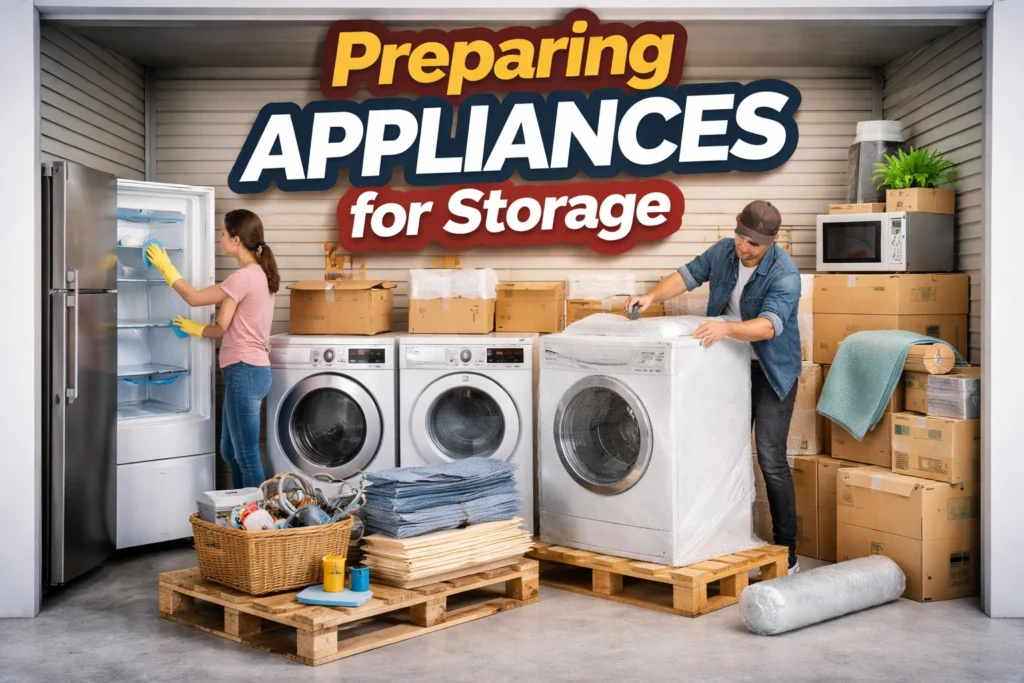
Before storing any appliance, clean it properly to remove dirt and stains. Pay special attention to food residue inside appliances like refrigerators. After cleaning, let everything dry completely before packing. Any moisture left inside can cause mold and bad smells.
Disconnecting Components
Unplug all appliances before moving them into storage. Remove any loose parts like hoses, trays, and shelves carefully. Keep all these parts together in one place. Use a labeled bag so you can easily find them later.
Proper Packing Methods
Use bubble wrap, blankets, or covers to protect appliances from damage. This helps prevent scratches and keeps dust away. Try to cover all sides properly for better safety. Smaller appliances can also be placed inside boxes.
Leaving Doors Slightly Open
Leave the doors of appliances like fridges and washers slightly open. This allows air to move inside the appliance. It helps prevent bad smells from building up. Proper airflow keeps the inside fresh.
Elevating Appliances
Do not place appliances directly on the floor of the storage unit. Use pallets or wooden boards to lift them slightly above the ground. This protects them from moisture and water damage. It also helps keep them clean and safe. Using a storage calculator can help you plan the space needed for all your appliances.
Choosing the Right Storage Unit
When you plan to store appliances in a storage unit, choosing the right place is very important. A clean and dry unit helps protect your appliances from dust and moisture. Security also plays a key role in keeping your items safe from damage or theft. The right storage unit gives you peace of mind.
If you plan to keep appliances for a long time, a climate-controlled unit is a better choice. It helps protect against extreme heat and cold. It also controls humidity, which can damage appliances over time. This type of unit keeps your appliances in better condition.
Common Storage Mistakes
Many people damage their appliances when they try to store appliances in a storage unit without proper care. Small mistakes can cause rust, mold, scratches, or other damage. Being careful from the start keeps your appliances safe and lasting longer.
- Storing appliances without cleaning them
- Sealing them completely without airflow
- Placing them directly on the ground
- Stacking heavy items on top
- Also, be aware of items that are not allowed in a storage unit, as storing prohibited items can cause problems. You can check the full list here.
Avoiding these mistakes helps protect your appliances and saves you from costly repairs later. Taking a few simple steps before storage ensures your appliances stay in good condition. Proper preparation also makes it easier to use them when needed. Careful handling always pays off in the long run.
Long-Term Storage Tips
If you plan to store appliances for a long time, proper care is very important. Small steps can help keep them safe and in good condition. Regular attention can prevent damage over time.
- Check them occasionally
- Use moisture absorbers inside the unit
- Keep space between items for airflow
- Cover appliances to protect from dust
These simple steps can help maintain the quality of your appliances. They also help prevent problems like rust and mold. Taking a little time for care can save you from damage later. Your appliances will stay safe and ready to use when needed.
FAQs
Can I store a refrigerator in a storage unit?
Yes, you can store a refrigerator safely if you clean it thoroughly and dry it completely. Make sure to remove all food and keep the door slightly open. This allows airflow and prevents bad odors or mold from forming inside.
Do I need a climate-controlled storage unit?
A climate-controlled unit is recommended for long-term storage or sensitive appliances. It protects against extreme heat, cold, and humidity. This helps prevent damage like rust, mold, or warping of appliance parts.
How do I prevent mold in stored appliances?
To prevent mold, make sure all appliances are completely dry before storing. Allow airflow inside units like fridges or washers by keeping doors slightly open. Regular checks can also help catch any moisture issues early.
Can I stack appliances in storage?
It is better not to stack appliances, especially heavy ones. Stacking can cause scratches, dents, or damage to the internal parts. Keep appliances spaced out and stable for better protection.
Conclusion
You can safely store appliances in a storage unit if you follow the right steps. Cleaning, drying, and packing them properly are the most important parts of the process. Choosing the right storage unit adds extra protection and helps prevent damage. Avoiding common mistakes will keep your appliances in good condition for longer. A little care now can save money and effort later. For more advice, check out these appliance storage tips to see practical ideas and real-life examples.