
Storage Tips Farmington MO
Good storage tips come from experience, not guesswork. The tips below are drawn from years of managing a self-storage facility in Farmington, MO, watching what actually holds up in a unit over time and what leads to a damage claim later. Use this list before you pack your first box.
Planning Tips
1. Rent the right size, not just the smallest size. Renting too small forces unsafe stacking and damaged items. Renting too large wastes money every month. Match your unit to your actual item list using this storage unit size calculator near Farmington, MO before you sign a lease.
2. Choose climate control for anything sensitive to humidity. Missouri summers are humid and winters swing through hard freezes. Wood furniture, electronics, photographs, mattresses, and musical instruments hold up far better in a temperature- and humidity-stable unit than a standard drive-up space.
3. Gather all your materials before moving day, not during it. Collect boxes, tape, markers, bubble wrap, packing paper, and moving blankets ahead of time. Running out of supplies mid-move leads to rushed, unsafe packing.
4. Use uniform box sizes. Matching box sizes stack flat and evenly, which prevents the leaning, unstable towers that eventually topple and crush what’s underneath.
5. Cap every box at 25-30 pounds. A box heavier than 30 pounds cracks at the seams and becomes a back-injury risk when you lift it later. If it feels heavier than that, split the contents into two boxes.
6. Build an inventory list and keep it separate from the unit. Write down what’s in every box and store the list at home, not inside the unit itself. This saves hours of searching and matters if you ever need to file an insurance claim.
7. Confirm your belongings are covered. Many homeowners’ or renters’ insurance policies already extend to off-site storage. If yours doesn’t, ask about a facility protection plan before move-in day.
Loading and Organizing Tips
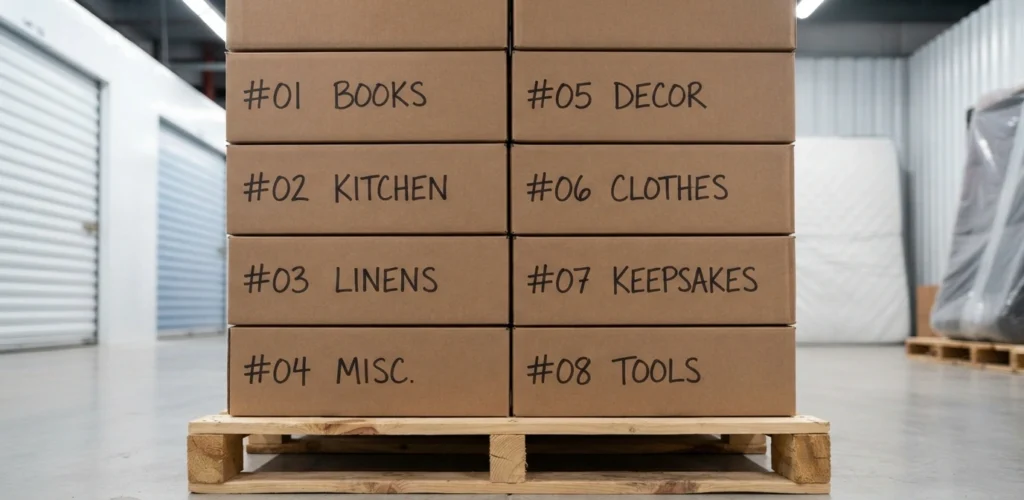
8. Lay a protective floor cover first. Even sealed concrete sweats with temperature changes. A plastic sheet, 2×4 boards, or wooden pallets under your first layer of items keep dampness from wicking upward.
9. Place frequently needed items near the front. Anything you’ll access again before the lease ends, such as seasonal gear or tax documents, should load in last, not get buried behind everything else.
10. Leave a center aisle. A narrow walkway down the middle means you can reach anything without unstacking the whole unit to find one box.
11. Leave a small gap between boxes and the walls. An inch or two of clearance keeps air circulating and prevents condensation from building up against metal walls.
12. Stack heavier boxes on the bottom, lighter boxes on top. This isn’t just about balance. It protects fragile items underneath from being crushed under weight they weren’t built to hold.
13. Never store anything combustible. Gasoline, propane, paint thinner, solvents, and fireworks are prohibited at every facility and put the entire property at fire risk. Check these self storage FAQs for Farmington, MO renters if you’re unsure what qualifies.
14. Label all four sides of every box, then number and seal it. A label on just the top is useless once boxes are stacked. Writing on all four sides means you can identify contents no matter which way the box faces.
15. Use numbers instead of detailed descriptions on labels. A box labeled “Electronics” or “Jewelry” tells anyone exactly what’s worth breaking in for. A number that matches your private inventory list protects you without advertising your valuables.
Packing Tips for Fragile and Household Items
16. Wrap dishes and glasses individually and pack them on edge. Edge-packed plates absorb impact far better than a stacked, flat pile. Use plenty of packing paper between each piece.
17. Wrap mirrors and pictures in cardboard, mark them clearly, and stand them on end. Flat storage under other boxes is the most common cause of cracked glass. Standing them upright, cushioned between soft items, keeps them intact.
18. Turn dresser drawers into free storage space. Drawers can hold picture frames, china, silverware, or small knick-knacks. Wrap the contents in a towel or blanket so nothing shifts or scratches.
19. Use large appliances as packing cases. An empty washing machine drum or refrigerator is free interior space. Fill it with towels, linens, or off-season clothing before it goes into the unit.
20. Store TVs and electronics toward the back of the unit. Temperature swings are most extreme near the door every time it opens. The back of a climate-controlled unit is the safest spot for anything electronic.
Furniture and Textile Tips
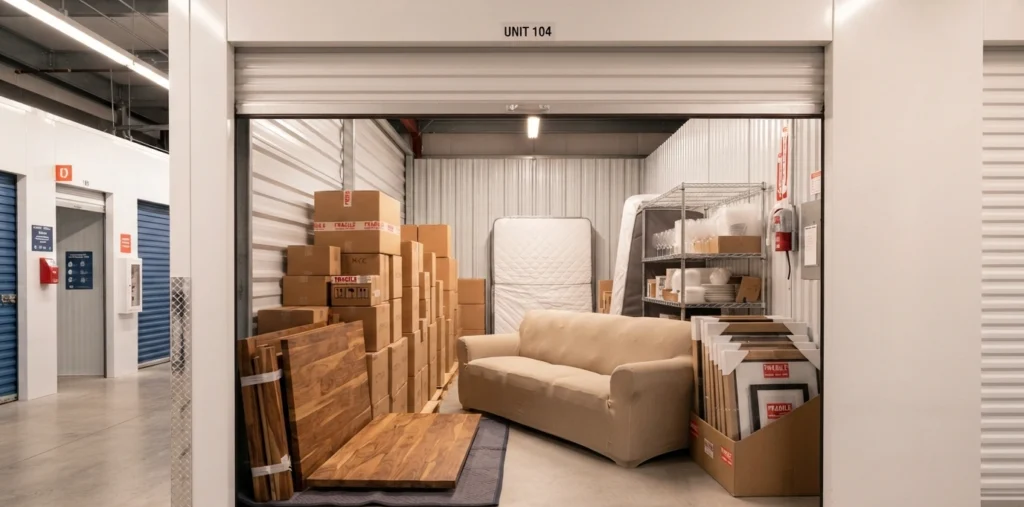
21. Break down tables with removable legs. Detach the legs and wrap them separately to save significant floor space, and bag the hardware so nothing gets lost.
22. Store sofas and loveseats on end. Standing furniture upright saves floor space. Wrap cushions in breathable fabric, not sealed plastic, which traps moisture against the material.
23. Keep sharp or heavy objects off upholstered furniture. Tools or heavy boxes resting on a cushion will compress or tear the fabric permanently, even with a blanket underneath.
24. Cover stuffed and upholstered furniture with breathable material. A cloth dust cover or moving blanket protects against dust buildup without sealing in the moisture that plastic traps.
25. Stand mattresses on their side and prop them straight. A mattress left leaning at an angle for months will bend permanently and develop lumps that never recover. Use a breathable mattress bag, not sealed plastic.
Outdoor Items and Metal Tips
26. Group yard tools together inside empty trash cans. Shovels, rakes, hoes, and hoses stand upright and organized inside a garbage can instead of leaning loose. Stack a second can inside for even more room.
27. Wipe metal items with machine oil before storage. Bikes, metal tables, and tools develop surface rust within a single season during Missouri’s humidity swings. A light protective coat prevents it.
28. Drain fuel from small engines before winter storage. Lawnmowers, generators, and similar equipment should be fully drained to prevent fuel damage and lingering fumes through freeze-thaw cycles.
Pest and Long-Term Storage Tips
29. Elevate everything off the concrete floor. Pallets or shelving keep boxes away from ground moisture and make it harder for pests to reach your belongings.
30. Check in on long-term units every few months. Don’t wait until move-out day to look inside. A quick visit catches moisture, pest, or shifting issues early, before they damage anything else nearby.
Why Local Missouri Weather Matters for Your Storage Plan
Farmington’s climate is the detail most national storage-tip lists leave out entirely. Summer humidity peaks between June and August, which is the worst window to move unprotected wood furniture or electronics into a standard unit. Winter brings freeze-thaw cycles that crack anything holding residual moisture.
That combination is exactly why climate control and breathable packing materials matter more here than in a dry climate. A well-run facility with on-site management also catches small issues, like a leaking roof section or a pest problem, before they become a claim.
FAQs
What are the most important storage tips for first-time renters?
Choose the correct unit size and climate type first, use uniform boxes instead of mismatched ones, cap every box at 25-30 pounds, and build an inventory list kept separate from the unit.
Do I need a climate-controlled unit in Missouri?
Yes, if you’re storing wood furniture, electronics, mattresses, photographs, or musical instruments for more than a few weeks. Missouri’s humid summers and freezing winters are hard on anything sensitive to temperature and moisture swings.
How do I stop mold from forming in my storage unit?
Make sure everything is completely dry before packing, use breathable covers instead of sealed plastic on furniture and mattresses, leave airflow gaps around boxes, and elevate items off the concrete floor.
How full should I pack a storage unit?
Pack it efficiently but leave a center aisle and a small gap around the perimeter. Wall-to-wall packing with no airflow speeds up moisture and pest problems.
What size unit do I need for a one-bedroom apartment?
Most one-bedroom apartments fit comfortably in a 10×10 unit, though it depends on furniture volume. A size calculator gives a far more accurate answer than guessing.
Is my stuff covered by insurance while it’s in storage?
Often, yes, through an existing homeowners’ or renters’ policy, but confirm the coverage limit for off-site property first. Most facilities also offer an affordable protection plan at move-in.
Can I store food or plants in my unit?
No. Perishable food attracts pests quickly, and living plants or animals aren’t permitted under standard facility rules for safety and pest-control reasons.
How do I keep my storage unit secure?
Use a disc or cylinder lock instead of a basic padlock, label boxes with numbers instead of detailed contents, and choose a facility with gated access, video surveillance, and on-site management.
Ready to Put These Storage Tips to Work?
A well-managed facility makes every tip on this list more effective. Browse storage units near me in Farmington, MO or rent a storage unit near me today and move in with confidence.