
What Items Are Not Allowed in a Storage Unit? Full Storage Guide
Many people wonder what they can safely store in a storage unit. The most important thing to know is which items are not allowed in a storage unit. Hazardous materials, perishable goods, and illegal substances are strictly prohibited. Knowing these rules helps keep your belongings safe and avoids fines or legal problems.
Storage units are ideal for furniture, clothing, documents, and household items that do not require special conditions. Proper organization and careful packing make it easier to access items when needed. Certain appliances and electronics can also be stored safely if prepared correctly. Choosing the right type of unit can protect delicate or valuable items from damage.
It is important to follow safety guidelines and prepare all belongings before storing. Using protective covers, strong boxes, and proper labeling helps maintain organization. Climate-controlled units are beneficial for items sensitive to heat or humidity. Following these steps ensures a secure and well-organized storage experience.
Storage Unit Safety at a Glance
| Category | Examples of Items | Notes / Tips |
| Hazardous Materials | Flammable liquids, chemicals, explosives | Never store in any unit; risk of fire or fines |
| Perishable Goods | Food, plants, live animals | Can rot, attract pests, or create odors |
| High-Value / Irreplaceable Items | Cash, jewelry, rare collectibles | Better kept at home or in a bank safety deposit box |
| Legally Restricted | Firearms (unless regulated), illegal substances | Storing illegally can cause legal trouble |
| Electronics | Computers, TVs, gaming consoles | Store carefully in padded boxes; keep away from moisture |
| Furniture | Sofas, beds, tables | Use protective covers; stack safely; climate-controlled units recommended |
| Documents / Paperwork | Important files, contracts | Use waterproof/fireproof containers and label boxes clearly |
| Appliances | Refrigerators, microwaves, washing machines | Clean, dry, and ventilate if possible; avoid stacking heavy items on top |
Items Safe to Store
Certain items can be safely stored without any risk. Knowing what is safe helps you organize your storage unit efficiently. Proper packing and labeling make it easier to access items when needed. Following simple storage tips keeps your belongings in good condition.
Household Items
Household items are some of the easiest to store safely. Furniture, small appliances, and décor can be kept without special precautions. Seasonal items like clothes and toys should be packed carefully.
- Furniture, décor, and small appliances
- Clothing, toys, and seasonal items
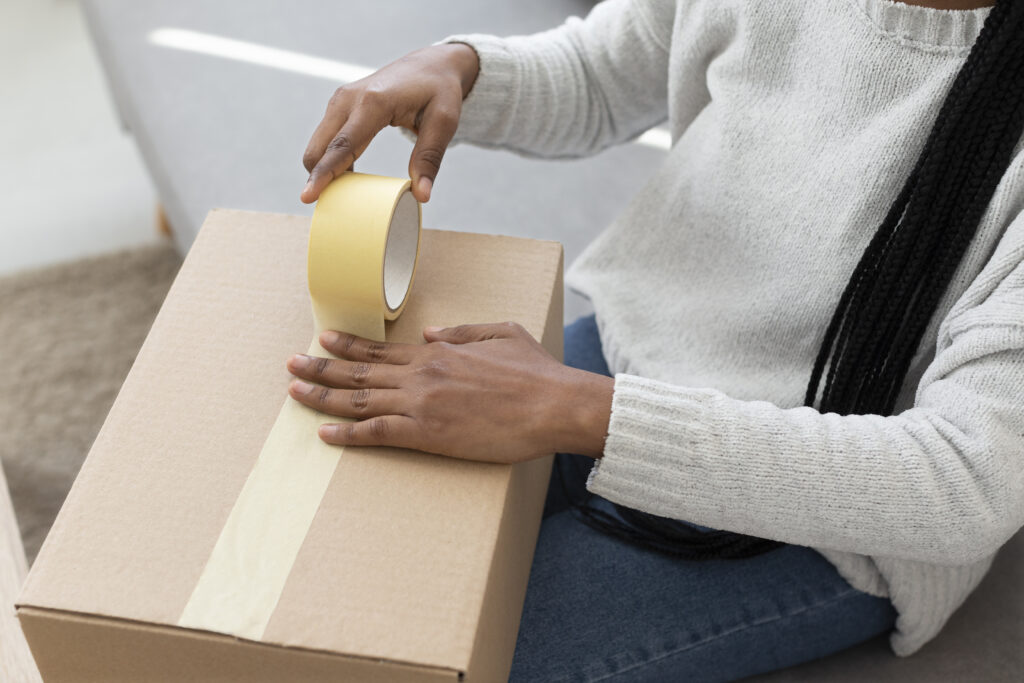
Packing household items in sturdy boxes and labeling them clearly prevents damage and makes retrieval simple. You can also plan the space you need accurately using a storage calculator.
Business Items
Office supplies, documents, and inventory can be safely stored in most units. Items that do not require climate control or special care are ideal. Organization and proper packing are key to keeping these items secure.
- Office supplies, files, and inventory
- Equipment that does not require special conditions
Labeling boxes and keeping similar items together helps maintain order and saves time when accessing business materials. Using protective covers for delicate items and sturdy boxes ensures your personal belongings stay safe and organized.
Personal Belongings
Books, collectibles, and sports equipment are generally safe to store. These items need minimal protection if packed correctly. Proper labeling ensures you can easily find important belongings when required.
- Books, collectibles, and sports gear
- Pack items carefully and label boxes for easy access
Using protective covers for delicate items and sturdy boxes for heavy belongings ensures everything stays safe and organized.
Furniture Storage Tips
Storing furniture correctly prevents damage and preserves its condition. Proper preparation ensures that wooden, fabric, and metal items last longer. Using protective materials reduces scratches, dents, and moisture damage. Choosing the right storage unit keeps furniture safe and organized.
- Clean and dry furniture before storing
- Cover sofas, beds, and tables with protective material
- Stack items carefully to avoid scratches or dents
- Use climate-controlled units for wooden or delicate furniture
Furniture should be packed carefully and placed in a way that allows airflow. Protective covers and padding help prevent accidental damage. Following these tips keeps furniture in excellent condition for long-term storage.
Electronics Storage Guidelines
Electronics need proper care to avoid damage from temperature or humidity. Improper storage can lead to malfunctions or permanent damage. Knowing which items are not allowed in a storage unit helps you avoid storing hazardous or sensitive electronics incorrectly. Packing electronics carefully helps extend their lifespan, and using the right storage unit protects devices from environmental risks.
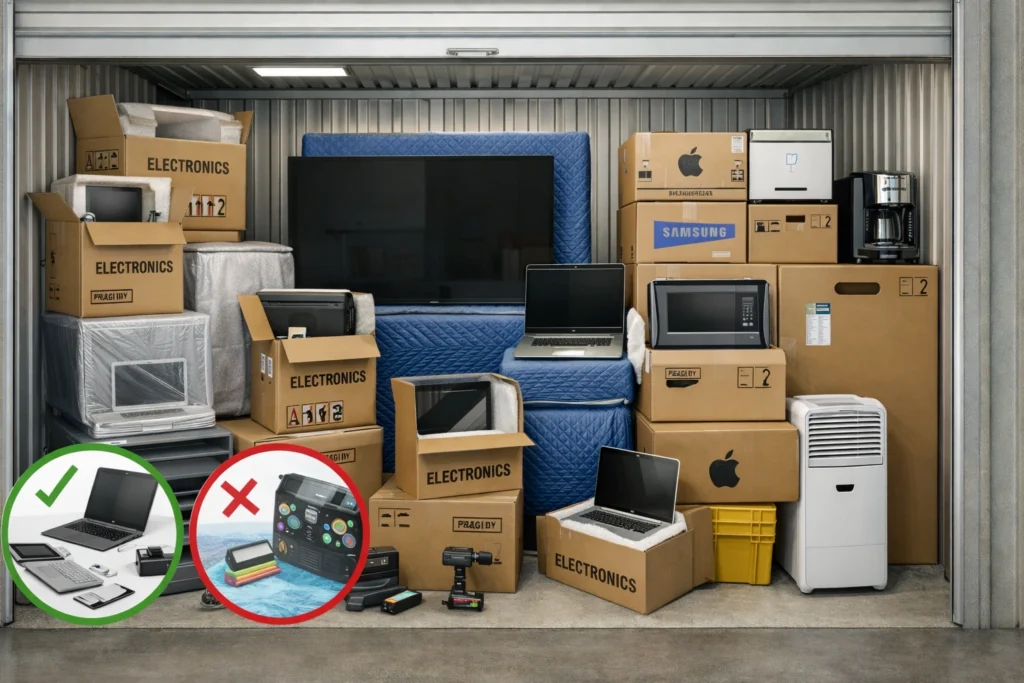
- Remove batteries and unplug all devices
- Use padded boxes or original packaging
- Avoid storing electronics near heat or moisture
- Climate-controlled units provide extra protection
Properly packed electronics are easier to access when needed. Labeling boxes ensures you can quickly find devices without opening multiple containers. Climate-controlled units help prevent damage from humidity and extreme temperatures.
Always keep electronics away from heavy items that could fall or press on them. Soft padding and separation from other objects reduce the risk of scratches or breaks. Following these guidelines keeps your electronics safe and functional for long-term storage.
Appliance Storage Advice
Large appliances require preparation to stay safe. Proper cleaning and drying prevent mold and rust. Storing appliances carefully ensures they remain in working condition. Using the right unit protects sensitive or heavy items from damage.
- Clean and dry appliances before storage
- Keep doors slightly open for ventilation if possible
- Place appliances on sturdy surfaces
- Climate-controlled units are recommended for sensitive appliances
Documents & Paperwork Storage
Important documents should be stored carefully to prevent damage. Proper storage protects papers from moisture, fire, and pests. Using the right containers and organization methods keeps documents safe. Climate-controlled units provide extra protection for sensitive or valuable paperwork.
- Use waterproof and fireproof containers
- Store in labeled boxes or folders
- Keep away from moisture, heat, and pests
- Climate-controlled units help maintain document quality
Packing documents in sturdy, protective containers ensures they remain intact over time. Labeling boxes clearly allows for easy retrieval when needed. Climate-controlled storage helps prevent yellowing, warping, or mold on important papers.
Items Not Allowed
Certain items are prohibited due to safety or legal reasons. Storing banned items can cause damage, fines, or legal trouble. Knowing which items are not allowed in a storage unit protects your belongings and others. Following the rules ensures a safe and secure storage environment.
- Hazardous materials: flammable liquids, chemicals, explosives
- Perishable goods: food, plants, live animals
- High-value or irreplaceable items: cash, jewelry, rare collectibles
- Legally restricted items: firearms (unless regulated), illegal substances
Storage Unit Preparation Tips
Proper preparation ensures safety and easy access to your belongings. Organizing items carefully prevents damage and makes retrieval faster. Using the right packing materials protects fragile and valuable items. Following storage best practices keeps your unit neat and secure.
- Use strong boxes and protective covers
- Label all boxes clearly
- Stack heavy items at the bottom
- Keep aisles clear for access
- Consider climate-controlled units for sensitive items
Packing boxes with sturdy materials reduces the risk of tears or breakage. Labeling each box helps locate items quickly without unnecessary unpacking. Keeping items organized and stacked properly saves space and prevents accidents.
Maintaining clear aisles allows easy access to all areas of the unit. Separating heavy and light items ensures safety and stability. Climate-controlled units protect sensitive belongings from temperature and humidity changes.
FAQs
How to store electronics safely?
Electronics should be packed in padded boxes or their original packaging. Remove batteries and unplug all devices before storing. Keep items away from heat, moisture, and heavy objects to prevent damage.
How to prepare furniture for long-term storage?
Clean and dry all furniture before storing to avoid mold or stains. Cover sofas, beds, and tables with protective material. Stack items carefully to prevent scratches and use climate-controlled units for delicate pieces.
What are the benefits of climate-controlled storage?
Climate-controlled storage helps protect sensitive items from extreme temperatures and humidity. Electronics, wooden furniture, and documents stay safe and last longer. It also reduces the risk of mold, warping, or corrosion.
How to protect documents from moisture and fire?
Store important papers in waterproof and fireproof containers. Keep them off the ground and away from windows. Label boxes clearly to locate documents quickly when needed.
What are common mistakes when storing household items?
Stacking heavy items on fragile ones can cause damage. Failing to label boxes makes retrieval difficult. Not using protective covers or sturdy containers can result in wear, scratches, or water damage.
Conclusion
Knowing which items are safe and which items are not allowed in a storage unit is essential for any storage plan. Proper preparation, careful packing, and organization help protect your belongings from damage. Using protective covers and strong boxes ensures fragile and valuable items stay safe.
Climate-controlled units are recommended for sensitive furniture, electronics, and documents. For a detailed list of prohibited items, you can check items not allowed in a storage unit on Quora. Following these guidelines makes it easier to access and maintain your storage items, keeping your unit secure and organized.