Is Long-Term Storage Cheaper Than Short-Term Storage?
In most cases, long-term storage cheaper than short-term storage options are available when you commit to a longer rental period. Many storage facilities offer discounted monthly rates for six-month or yearly agreements. Short-term rentals usually follow standard month-to-month pricing without extended discounts. However, the final cost depends on contract terms, unit type, and location.
Short-term storage works well for temporary moves, renovations, or short relocation periods. Long-term storage is better suited for extended travel, military deployment, business inventory, or downsizing. Pricing differences often come from promotional offers, rate stability, and contract commitments. Understanding these cost factors helps you choose the most affordable and practical storage solution.
Comparison: Long-Term Storage Cheaper Than Short-Term Storage
| Feature | Long-Term Storage | Short-Term Storage |
| Monthly Cost | Often Lower | Standard Rate |
| Flexibility | Less Flexible | Very Flexible |
| Best For | 6+ Months | Temporary Needs |
| Rate Stability | Often Locked | May Increase |
What Is Short-Term Storage?
Short-term storage refers to renting a storage unit for a brief period, usually a few weeks to several months. Most facilities provide flexible month-to-month rental agreements. While convenient, the monthly price may be slightly higher compared to long-term storage cheaper than short-term storage options, which often offer discounted rates for extended rentals.
Who Uses Short-Term Storage?
- People moving to a new home
- Home renovation projects
- Temporary job relocation
- College students during summer break
Cost Structure of Short-Term Storage
- Standard monthly rate
- Fewer long-term discounts
- More flexibility to cancel anytime
Short-term storage is convenient because you are not locked into a fixed contract. It allows easy move-in and move-out based on your schedule. However, the monthly price may be slightly higher compared to long-term rental agreements.
What Is Long-Term Storage?
Long-term storage means renting a unit for six months, one year, or longer. Many storage facilities offer better pricing for extended rental periods, and you can learn more about why storage units may seem expensive in this explanation of storage costs. This option is ideal for customers who know they will need storage for a long duration, and you can easily rent a storage unit online to secure your space.
Who Uses Long-Term Storage?
- Military deployment
- Long-term travel
- Business inventory storage
- Downsizing households
Cost Structure of Long-Term Storage
- Discounted monthly rates
- Possible prepayment savings
- Fixed-term contracts
Long-term storage often reduces the overall monthly cost. Some facilities also provide rate protection with fixed pricing agreements. This makes it a cost-effective choice for extended storage needs.
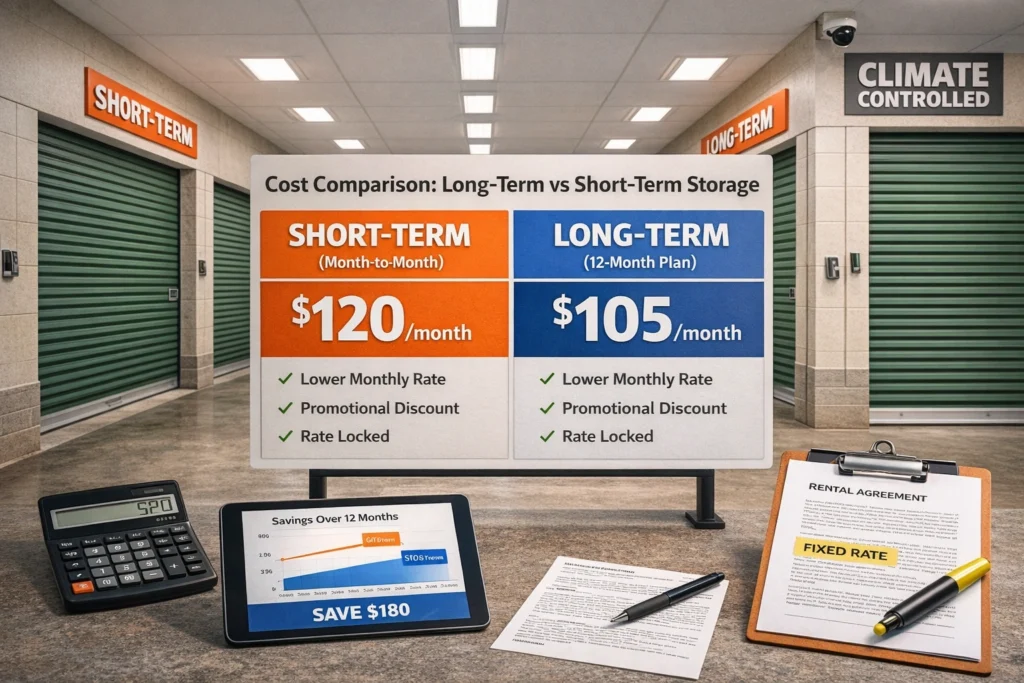
Cost Comparison: Long-Term vs Short-Term Storage
Understanding the cost differences can help you choose the right storage option. Long-term and short-term storage prices are not always the same. Many factors affect the final monthly cost.
1. Monthly Rate Differences
In many storage facilities, long-term renters may receive lower monthly rates and extra benefits. These discounts make long-term storage more affordable over time. Renting for a longer period can also provide better value for bigger units, and you can use a storage cost calculator to estimate your monthly rates and total savings.
- Lower monthly rates
- Promotional discounts
- Better value for larger units
For example:
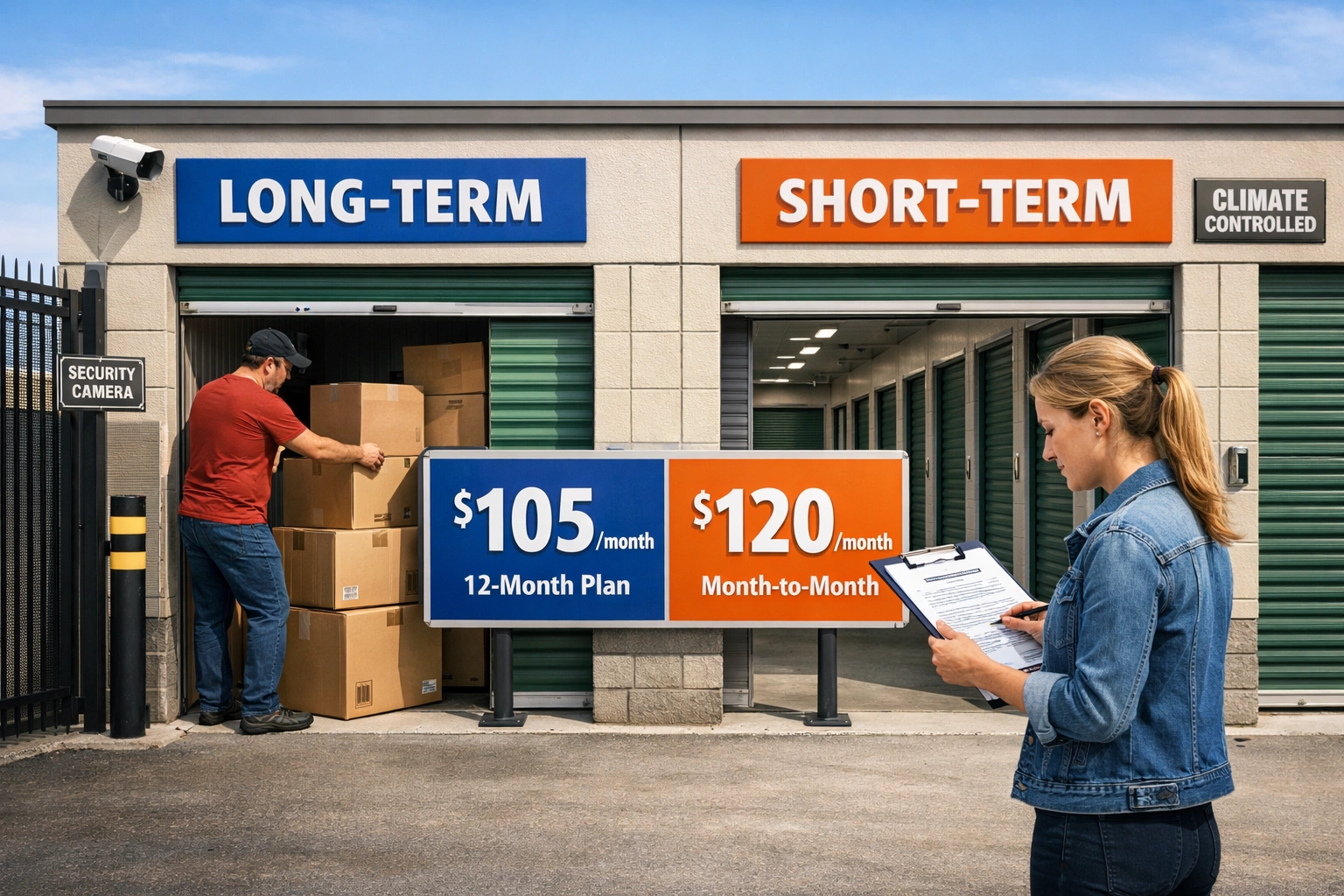
A unit priced at $120 per month short-term may cost $105 per month with a 12-month agreement. This difference may seem small but adds up significantly if you rent for a year or longer. Long-term rentals are a cost-effective choice for people who know they will need storage for months.
2. Discounts and Promotions
Many storage facilities offer special deals to attract renters. Long-term storage contracts often include better promotions compared to month-to-month rentals. Using these offers wisely can help you save even more.
- First month free
- 50% off first three months
- Discounts for paying several months in advance
These promotions can make long-term storage cheaper in total cost. Always ask the facility about current deals before signing a contract. Combining discounts with longer-term rentals often gives the best value.
3. Hidden Costs to Consider
Even with lower monthly rates, extra costs can affect the total price. Being aware of these hidden fees helps you understand why long-term storage cheaper than short-term storage may still save you money overall. Short-term rentals may seem flexible but sometimes come with additional charges that increase the total cost.
- Administrative fees
- Required storage insurance
- Late payment fees
- Possible rate increases
Some month-to-month rentals may increase in price over time. Long-term agreements sometimes lock in your rate, which protects you from price changes. Knowing all fees upfront ensures you get the best deal and avoids unexpected expenses.
When Is Long-Term Storage Cheaper?
Long-term storage is often more affordable if you plan ahead and know your storage needs. Renting for a longer period usually lowers the monthly cost and can include extra benefits. This option works best when you don’t need frequent access and want predictable pricing.
Reasons Long-Term Storage Is Cheaper
- You need storage for six months or more
- The facility offers discounted extended plans
- You want price stability
- You do not need frequent access
If you already know your storage timeline, committing to a longer period can save money. Long-term storage is ideal for people who plan ahead and want to avoid unexpected price increases. Choosing this option carefully can result in significant savings over time.
When Short-Term Storage Makes More Sense
Short-term storage works well for people with temporary or uncertain storage needs. It provides maximum flexibility without locking you into a long contract. This option is best if you expect to move or change plans within a few months.
Reasons to Choose Short-Term Storage
- Your timeline is uncertain
- You are between homes
- You only need temporary space
- You want maximum flexibility
Even if the monthly rate is slightly higher, short-term rental can prevent early termination fees. It allows you to move in and out quickly without worrying about long-term commitments. Short-term storage is convenient for temporary solutions, even at a slightly higher price.
Other Factors That Affect Storage Costs
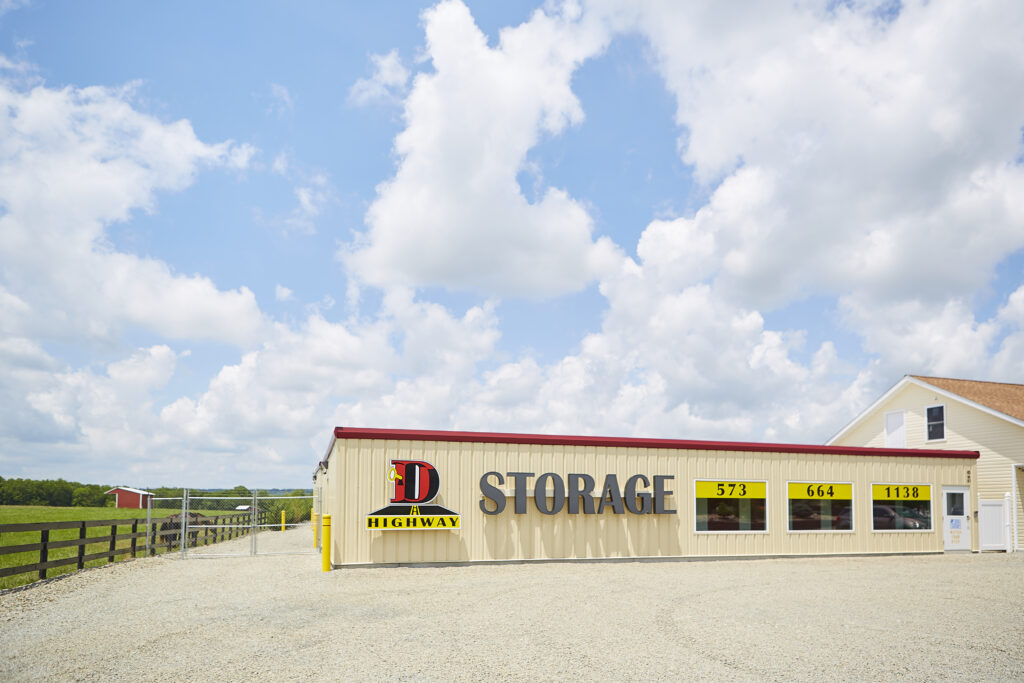
The price of storage is not just about how long you rent a unit. Several other factors can significantly impact your total cost. Understanding these can help you choose the best storage option for your needs. For more information about services, pricing, and available units, you can visit the D Highway Storage homepage. Considering location, unit size, and additional features can make a big difference in price.
1. Location
Where the storage unit is located plays a major role in cost. Units in busy urban areas are usually more expensive than those in smaller towns or rural locations. Choosing a facility near your home or work can save time, but prices may be higher.
2. Unit Size
The size of your storage unit affects how much you pay each month. Larger units naturally cost more, so renting a unit that fits your needs prevents overspending. Make sure to measure your items before selecting a size to get the best value.
3. Climate-Controlled Units
Climate-controlled units protect sensitive items such as furniture, electronics, and important documents. These units usually cost more than standard storage but can prevent damage over time. If you have items that need protection from heat, humidity, or cold, this option is worth the extra cost.
4. Security Features
Facilities with extra security features often charge slightly higher rates. Features like 24/7 surveillance, gated access, and on-site management provide peace of mind for valuable items. Paying a bit more for security can save you from potential loss or theft.
- 24/7 surveillance
- Gated access
- On-site management
5. Seasonal Demand
The time of year can affect storage prices. Summer is usually the peak moving season, which can increase rental costs. Planning ahead and renting during off-peak months can help you save money.
How to Save Money on Storage
No matter which storage option you choose, there are simple ways to reduce costs. Planning ahead and comparing different facilities can help you find the best deal. Small steps like choosing the right unit or asking for discounts can save a lot over time. Following these tips ensures you get the most value for your storage rental.
Tips to Save Money
- Selecting the correct unit size
- Asking about current promotions
- Comparing local facilities
- Locking in rates when possible
- Renting during off-peak seasons
Always request a detailed quote before signing any agreement. Confirming all fees upfront prevents unexpected charges later. Using promotions and choosing the right unit size can make storage affordable without sacrificing convenience.
FAQs
Is long-term storage always cheaper per month?
No, many storage facilities offer lower monthly rates for extended contracts, but it is not guaranteed. Choosing a longer rental period often reduces overall cost, so it’s best to compare prices before deciding.
Do storage unit prices increase over time?
Yes, some month-to-month rentals may increase in price over time. Long-term agreements often lock in your rate, protecting against unexpected hikes, so always check the terms before signing.
Can I switch from short-term to long-term storage?
Yes, many facilities allow you to upgrade from short-term to long-term storage. Confirm the contract terms and any potential fees first, as this option can save money if your storage needs extend.
Are there penalties for ending a long-term contract early?
Yes, some facilities charge early termination fees for breaking a long-term contract. Always read the agreement carefully, and plan your storage timeline to avoid extra charges.
Does climate-controlled storage cost more long-term?
Yes, climate-controlled units usually cost more than standard units, but they protect sensitive or valuable items from heat, humidity, and cold. For long-term storage of important items, this added cost can be worth it.
Conclusion
In many cases, long-term storage cheaper than short-term storage when you plan to rent a unit for six months or longer. Long-term agreements usually reduce the monthly rate and protect against unexpected price increases.
This option works well for people who know their storage needs in advance and want predictable costs. Short-term storage may still be better for temporary or uncertain timelines. To learn more about the differences between short-term and long-term storage, you can check this data storage comparison guide. Comparing both options carefully helps you make the most cost-effective choice and save money while keeping your items safe.