How to Prevent Rust on Metal Tools in Outdoor Storage Units?
To prevent rust on metal tools in outdoor storage units, clean and dry each tool, coat it with a thin layer of oil or wax, add a moisture absorber, and keep it off the floor. Rust forms when iron or steel meets water and oxygen. Outdoor units in Farmington, MO give moisture plenty of chances to reach your gear. Hot summers, cold snaps, and humid spring mornings cause condensation inside metal buildings, even when the unit looks dry.
This guide covers the prep steps, the products that work, and the storage choices that matter most for hand tools, power tools, and garden tools. It also compares outdoor units with indoor options, so you can match your tools to the right space. Every tip is based on how moisture behaves inside self storage units in St. Francois County. Use the chart below first, then follow the steps in order.
Tool Rust Risk Chart for Missouri Storage
| Tool Type | Rust Risk | Best Protection | Best Unit Choice |
| Wrenches, pliers, hammers | High | Light machine oil, wiped thin | Climate controlled |
| Chisels, saw blades, planes | Very high | Paste wax or rust inhibitor | Climate controlled |
| Drill bits, files, blades | Very high | Oiled cloth in a sealed bin | Climate controlled |
| Shovels, hoes, pruners | High | Boiled linseed oil or light oil | Drive up or climate controlled |
| Power tools | Medium | Remove batteries, add VCI bag | Climate controlled |
| Chains, bolts, loose hardware | High | Oil, then sealed jar or bin | Either, if sealed |
Why Metal Tools Rust in Outdoor Storage Units
Moisture, Oxygen, and Condensation
What causes rust on tools in storage? Water and oxygen react with the iron in steel and form iron oxide, which is rust. In outdoor metal units, condensation is the usual source. Warm, damp air touches cold steel, and water beads form on your tools overnight.
Dirt, salt, and sawdust speed this up. They hold water against the metal and keep it wet longer.
Farmington Humidity and Seasonal Swings
Missouri has humid summers and freezing winters. Farmington sits in the Ozark foothills, where air stays damp for long stretches. Metal starts to corrode much faster when relative humidity stays above roughly 60 percent.
Spring is the toughest season. Warm air rolls in after a cold spell, and every cold tool in an unheated unit starts to sweat.
Steps to Prevent Rust on Metal Tools Before Storage
Follow these four steps in order. Skipping the first one makes the rest far less effective.
Clean and Dry Every Tool
Wipe off dirt, grease, and sawdust. Use a wire brush on any spots that look rough. A tool that goes into a box damp will rust no matter which product you use later, so this is the one rule to prevent rust on metal tools for months at a time.
Let each tool air dry for a few hours after cleaning. Then wipe it once more with a clean rag.
Oil, Wax, and Rust Inhibitor Coatings
A thin barrier keeps moisture off bare steel. Pick the coating that fits the tool:
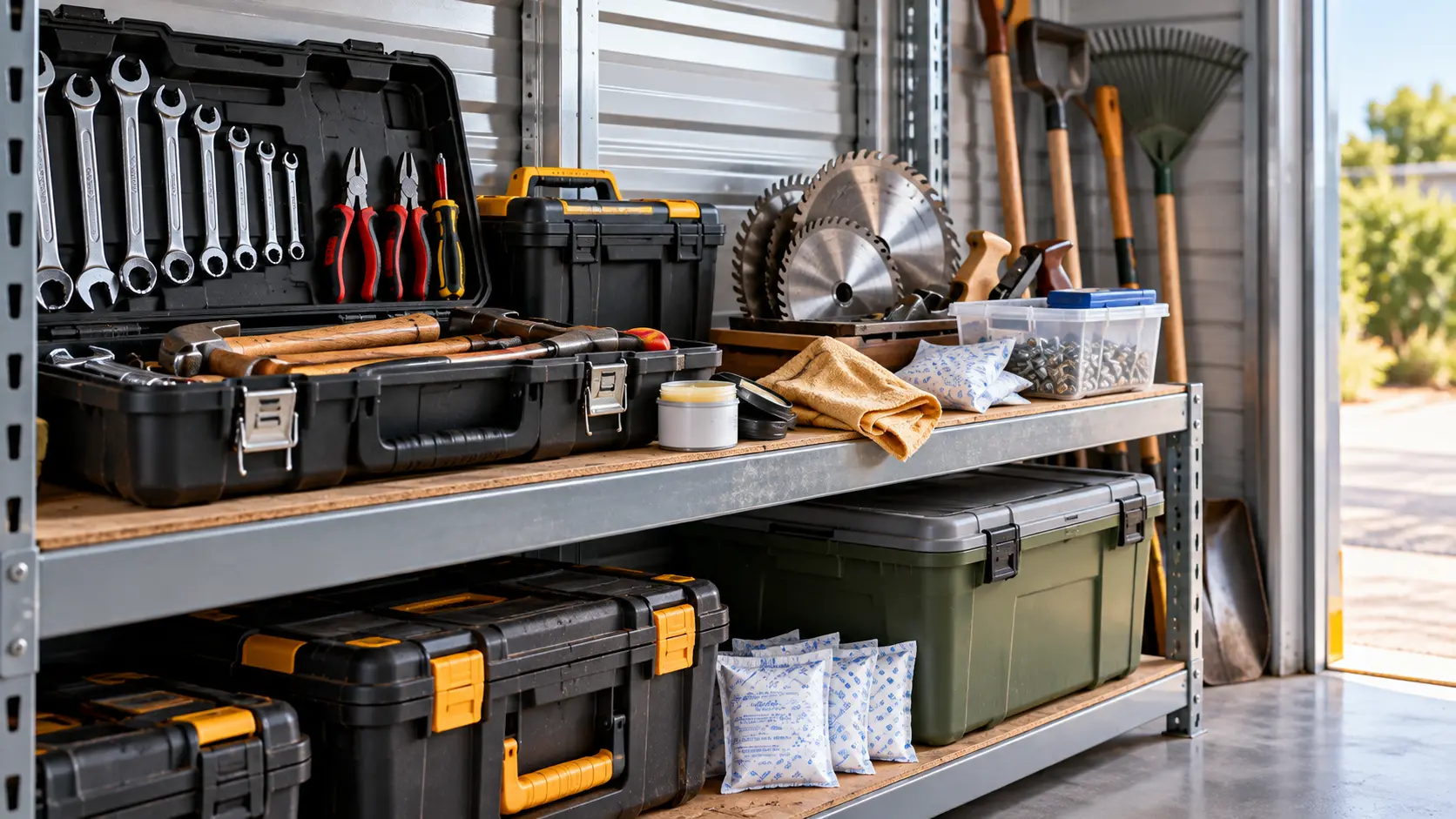
- Light machine oil works well on wrenches, pliers, and hammers.
- Paste wax protects saw tables, planes, and chisels.
- Boiled linseed oil suits shovels, hoes, and other digging tools.
- Rust inhibitor spray covers hard to reach spots and hardware.
Wipe off the extra. A heavy coat attracts dust, and dust holds water. WD-40 helps as a short term water displacer, but it is not a long term storage coating.
Desiccants and VCI Protection
Do moisture absorbers really help tools? Yes, inside a closed space. Silica gel packs and desiccant bags pull water vapor out of the air in a toolbox or bin.
VCI (vapor corrosion inhibitor) bags and emitter strips go a step further. They release a protective vapor that coats the metal. Replace or recharge desiccants every few months, since they fill up.
Raise, Seal, and Organize Your Tools
Never leave tools on a concrete floor. Concrete pulls moisture from the ground. Use pallets, shelves, or wall racks to keep everything raised.
Pick a sealed plastic bin with a gasket over cardboard. Do not wrap tools in plastic sheeting, because it traps damp air against the metal. Magnetic strips and pegboards keep tools separated, so one wet tool does not spread moisture to the rest.
Rust Removal for Tools Already Affected
If rust has already started, act fast. Light surface rust comes off easily, while deep pitting takes more work.
- Light rust: Soak the tool in white vinegar for several hours. Scrub with steel wool, rinse, and dry fully.
- Heavy rust: Use a wire wheel, a commercial rust remover, or electrolysis for badly pitted steel.
- After cleaning: Oil or wax the bare metal right away, since fresh steel rusts again within hours.
Climate Controlled Storage in Farmington MO for Tools
Coatings and desiccants help a lot, but they cannot change the air around your tools. Controlling humidity at the source works better. If you own valuable or rarely used tools, you can prevent rust on metal tools with climate controlled storage in Farmington MO instead of fighting condensation all year.
Climate Controlled vs Outdoor Units
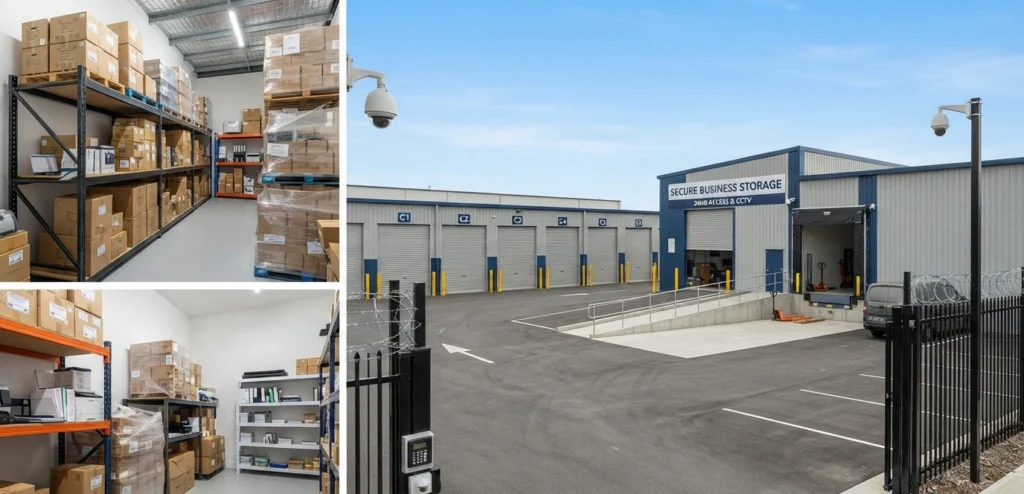
- Outdoor unit: Lower cost and easy vehicle access, but exposed to temperature swings and condensation.
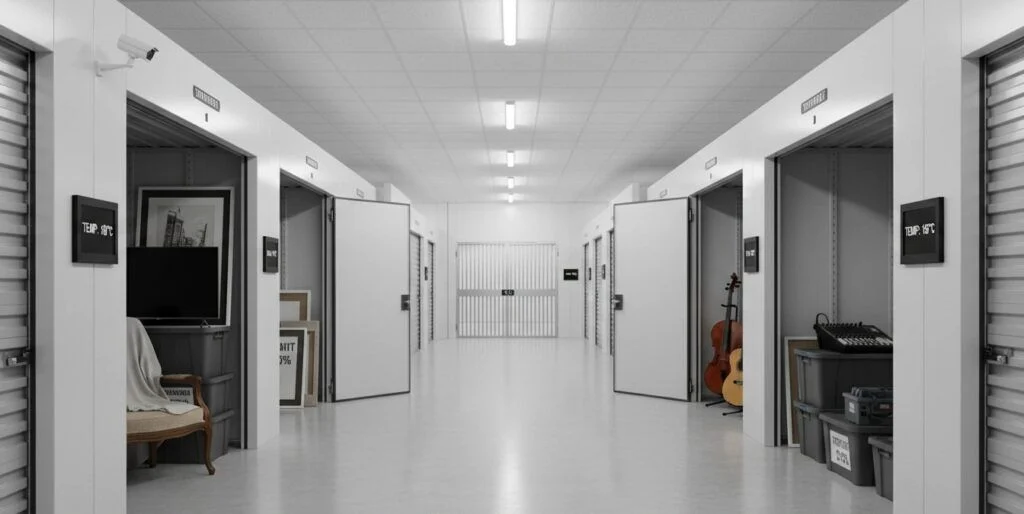
- Indoor climate controlled unit: Stable temperature and managed humidity, which means far less moisture on steel.
For power tools, precision tools, and anything you want to last for years, climate controlled storage units near Farmington, Missouri are the safer choice. Garden tools used every few weeks can do well in a drive up unit if you coat them first.
Protecting Books and Clothes Next to Your Tools
Most people do not store tools alone. Moisture that rusts steel also swells paper and grows mildew on fabric. Our guide on how to store books in a non climate controlled storage covers moisture barriers for paper goods.
Fabric needs the same care. Read how to keep clothes safe in non climate controlled storage before you pack boxes next to your toolbox.
Choosing the Right Unit Size and Location
Extra space lets air move around your tools, which lowers moisture buildup. Too little space forces you to stack bins against the walls, where condensation gathers. Use the storage size calculator to match your tools and shelving to the right unit.
D Highway Storage sits at 2079 Hwy D in Farmington, MO 63640. Our self storage units in Farmington, MO include 24/7 video surveillance and individual gate access codes. That gives tool owners and contractors in the area secure, convenient access to their equipment.
FAQs
Does WD-40 stop rust on tools in storage?
No, WD-40 gives short term protection but can dry into a sticky film over time. For storage longer than a few weeks, use machine oil, paste wax, or a rust inhibitor.
Can tools still rust in a climate controlled unit?
Yes, rust can still form if tools go in damp or if bare metal is left uncoated. The risk is far lower because humidity stays stable, so a light oil coat is usually enough.
What is the best way to store metal tools long term?
Clean and dry each tool, apply oil or wax, and place it in a sealed bin with a desiccant or VCI bag. Keep the bin off the floor. Climate controlled storage adds the strongest protection.
How often should I check tools in storage?
Check every month or two, and again after big weather changes. Replace spent desiccants and reapply oil if the coating looks dry.
Conclusion
The best way to prevent rust on metal tools is to stop moisture before it reaches the steel. Clean each tool, dry it fully, coat it, and pack it with a desiccant or VCI protection. Keep everything off the floor and check on it every month or two. These habits work in any unit, and they work even better in a controlled space.
D Highway Storage serves Farmington, MO with secure units at 2079 Hwy D, backed by 24/7 video surveillance and individual gate codes. Our team can help you choose between outdoor access and indoor climate control based on what you plan to store. Reserve online or visit the office to talk through sizes and availability. Your tools will be ready to work when you come back for them.