How to Keep Clothes Safe in Non Climate Controlled Storage?
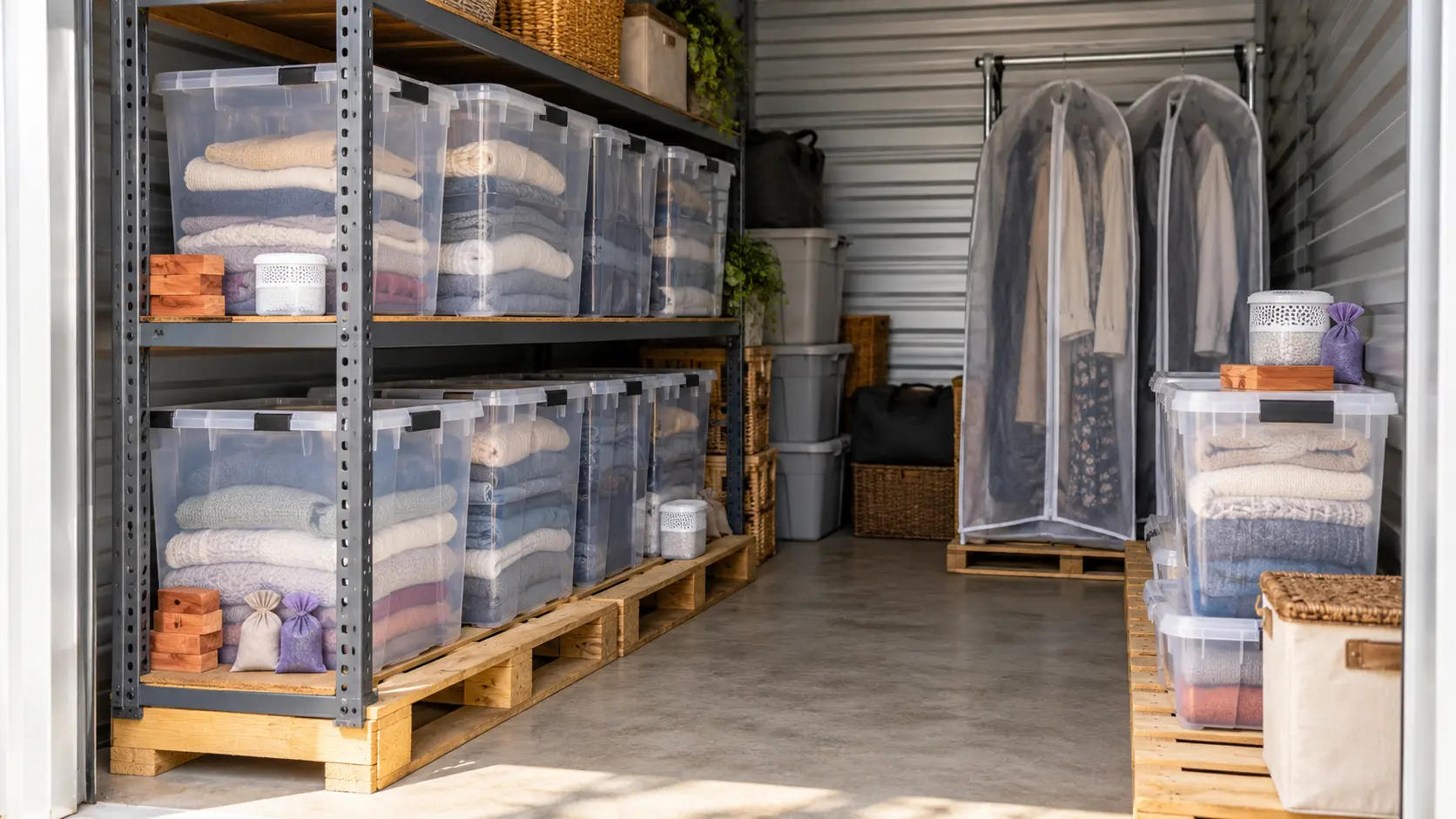
To keep clothes safe in non-climate controlled storage, wash and fully dry every item, seal it in airtight plastic bins with moisture absorbers, and raise the bins off the floor. These three steps block the main threats: moisture, heat, and pests. Farmington, MO has hot, sticky summers and cold winters, so a standard unit can swing hard from one extreme to the other. This guide shows you how to pack, place, and check your wardrobe so it comes out fresh.
Most blogs stop at “use plastic bins.” They skip fabric-specific rules, unit placement, and the point where a regular unit becomes the wrong choice. You will get all three here, plus a cheat sheet to screenshot before you pack. Everything is written for people storing clothes in and around Farmington, Bonne Terre, and Park Hills, Missouri. If your closet holds silk, leather, or wool you cannot replace, read the climate control section before you sign a rental.
Clothing Storage Cheat Sheet
| Clothing Type | Main Risk | Best Packing Method | Safe Without Climate Control? |
| Cotton, denim, polyester | Mildew if damp | Plastic bin with snap lid | Yes, with prep |
| Wool and knits | Moths, musty odor | Bin plus cedar blocks | Short term only |
| Silk and satin | Yellowing, heat stains | Cotton garment bag, acid-free tissue | Not recommended |
| Leather and suede | Cracking, mold | Breathable bag, no plastic | No |
| Suits and formalwear | Creases, moisture | Garment bag or wardrobe box | Short term only |
| Down jackets and coats | Clumping, damp smell | Loose bin, no compression | Yes, if bone dry |
| Baby and kids’ clothes | Stains, musty smell | Labeled bins by size | Yes, with prep |
Non Climate Controlled Storage Risks for Clothing
A standard unit has no thermostat and no humidity control. Outdoor weather moves right inside. Here is what that does to fabric.
Moisture, Mold, and Mildew
Humid air settles on fabric, and damp cotton can grow mildew in a few days. A common target for textiles is relative humidity under 50 percent. A unit without climate control cannot promise that number.
Heat and Fabric Damage
Metal-roofed units get very hot during Missouri summers. Heat yellows white fabric, fades dyes, and sets stains that were invisible before storage. It can also make elastic waistbands brittle.
Moths, Mice, and Insects
Clothes moth larvae feed on wool, silk, fur, and feathers. They prefer dark, undisturbed corners. Mice chew through cardboard and thin plastic bags quickly.
Keep Clothes Safe With a Step-by-Step Packing Plan
Good prep matters more than any product you buy. Follow these steps in order.
Wash and Dry Everything First
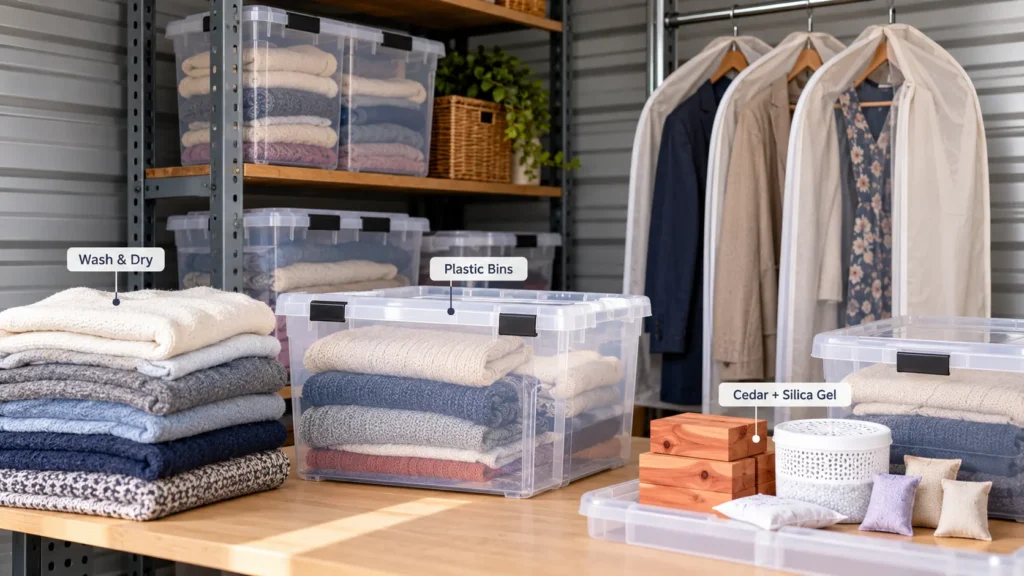
Wash or dry clean every piece, even items you wore once. Body oils and sweat attract pests and turn yellow over time.
Let clothes air dry for an extra day after the dryer. Check pockets for gum, receipts, and lip balm.
Pick Plastic Bins and Garment Bags
Use clear plastic bins with snap-on lids for folded clothes. Cardboard soaks up moisture and invites pests. A solid container is half the job when you want to keep clothes safe for months at a time.
Use cotton garment bags for suits and dresses. Skip thin plastic dry-cleaner bags, which trap moisture and cause yellowing.
Add Cedar, Silica Gel, and Moisture Absorbers
Drop silica gel packs or a calcium chloride moisture absorber into every bin. Add cedar blocks or lavender sachets to repel moths.
Skip mothballs. Their strong smell sticks to fabric and is hard to wash out.
Best Unit Layout for Stored Clothing
Where the bins sit inside the unit changes how long they last.
Pallets, Shelves, and Off-Floor Storage
Set bins on pallets or plastic shelves. Water from a leak or a wet floor never touches the lid that way. Leave a few inches between bins and the walls for airflow.
Put heavy bins on the bottom and light bins on top. Keep a clear aisle so you never have to climb over boxes.
If your unit also holds gadgets, follow this guide to store electronics in a storage unit without damage. Keep them away from your clothing bins.
Seasonal Rotation and Inspection Schedule
Visit your unit every two to three months. Open one bin from each stack and smell it. Look for spots, webbing, or droppings.
Swap used silica gel for fresh packs at each visit. Refold items on their creases to prevent permanent lines.
Clothes That Need Climate Controlled Storage in Farmington, MO
Some garments are too delicate or too valuable for a regular unit. If you cannot replace it, climate control is the safer path.
Silk, Wool, Leather, and Vintage Pieces
Wedding gowns, fur coats, leather jackets, vintage dresses, and designer suits all react badly to heat swings. Stable temperature and humidity stop yellowing, cracking, and mold before they start.
If you want to keep clothes safe in Farmington, MO for a year or longer, indoor climate control is the cleanest answer. Store only your best pieces there and put everyday clothes in a regular unit to save money.
Choosing Storage Units in Farmington Missouri
D Highway Storage sits at 2079 Hwy D, and its climate controlled units on Highway D in Farmington come with 24/7 video surveillance and individual gate access codes. Residents of Farmington, Bonne Terre, and Park Hills can reach the site without a long drive.
You can also see the full range at this self storage facility in Farmington, MO. If you run a shop and need to store uniforms or stock, read about the types of commercial storage facilities first.
Storage Unit Size for Wardrobe and Seasonal Clothing
Too small a unit means crushed bins and no airflow. Too big means you pay for empty space.
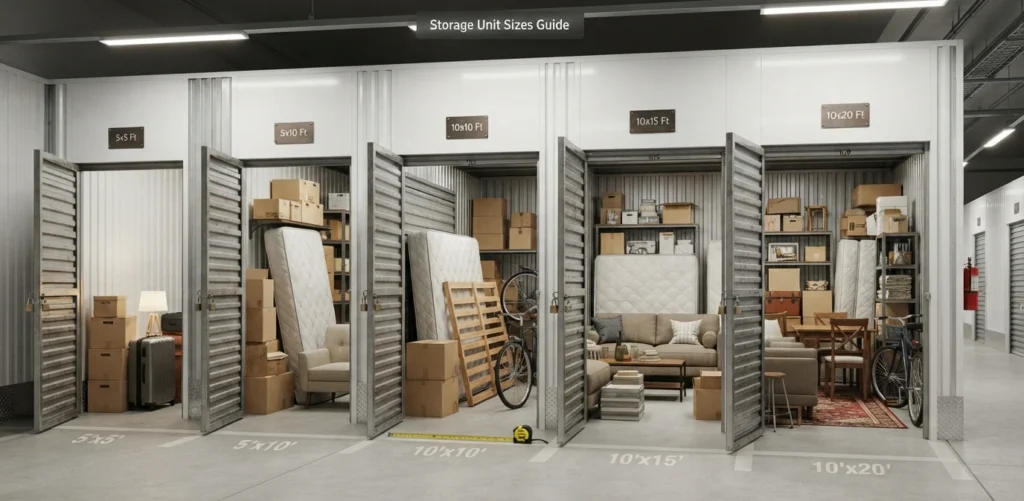
Count your bins, wardrobe boxes, and any hanging racks. Then run the numbers through a storage size calculator to match them to a unit. Stand wardrobe boxes upright and stack bins no higher than three.
FAQs
Can you store clothes in a non climate controlled storage unit?
Yes, clean, fully dry clothes in airtight plastic bins with moisture absorbers hold up well, especially cotton, denim, and polyester. Avoid silk, leather, and vintage items.
What is the best container for storing clothes in a storage unit?
Rigid plastic bins with snap-on lids are the best choice for folded clothes. They resist moisture, pests, and crushing. Use cotton garment bags for hanging suits and dresses.
Is vacuum sealing clothes in storage a good idea?
No, not for wool, down, or leather. Compression flattens fibers and can leave permanent creases. Cotton basics handle vacuum bags for short periods only.
How often should you check on stored clothes?
Check every two to three months. Smell a few bins, look for pests, and replace used silica gel. Short, regular visits catch problems before they spread.
Conclusion
Moisture, heat, and pests cause almost all clothing damage in a regular unit, and each one has a simple fix. Clean, dry fabric in sealed plastic bins, raised off the floor with absorbers inside, is the core of the plan. A quick check every two or three months stops small problems from ruining a wardrobe. That routine is how you keep clothes safe even when the unit has no climate control.
Some pieces still belong in climate controlled storage, especially silk, leather, vintage items, and formalwear. D Highway Storage on Hwy D in Farmington, MO offers drive-up and climate controlled options, so you can match each bin to the right space. Use the size calculator, pick your unit, and pack with the cheat sheet in hand. Your clothes will be ready to wear the day you open the first bin.