
How Much Does a Storage Unit Cost Per Month?
The average storage unit cost per month ranges between $50 and $300, depending on size and features. Whether you need a small unit for personal items or a larger unit for business storage, prices vary based on location and amenities. Choosing the right unit ensures you pay only for what you actually need.
At D Highway Storage, additional factors like climate control, 24/7 access, and security can affect your monthly cost. Understanding these elements helps you plan your budget and avoid unexpected fees. This guide will break down all the key factors influencing your storage unit costs & pricing.
Storage Unit Cost Per Month
| Unit Size | Typical Price (Per Month) | Climate Control Extra | Best For |
| Small (5×5 – 5×10) | $50 – $100 | +$20 – $30 | Personal items, boxes |
| Medium (10×10 – 10×15) | $100 – $200 | +$20 – $40 | Furniture, small business stock |
| Large (10×20 – 10×30) | $200 – $300 | +$30 – $50 | Large furniture, office storage |
| Climate-Controlled Units | +$20 – $50 extra | Already included | Sensitive items, electronics |
Factors Affecting Storage Unit Cost
Many things can affect the storage unit cost per month. Knowing these factors helps you choose the right unit and plan your budget effectively. Some features may increase your monthly cost, while others can help you save money.
1. Unit Size
The size of the storage unit is one of the main reasons prices differ. Smaller units are cheaper and good for personal items. Larger units cost more but give extra space for bigger items. Always choose a size that fits your needs to avoid overpaying.
2. Location
Where the storage unit is located affects the price. Units in high-demand urban areas usually cost more. Suburban areas are more affordable, but may be less convenient. Location also affects ease of access and overall safety.
3. Climate Control
Units with temperature and humidity control cost more than regular ones. They are ideal for sensitive items like electronics, documents, or furniture. Climate control protects your belongings from extreme heat or cold. If you store valuable items, it’s often worth the extra cost.
4. Accessibility
Units that allow 24/7 access or are on the ground floor may be more expensive. Higher accessibility makes it easier to move items in and out anytime. Some facilities charge extra for convenience features. Decide if you really need round-the-clock access.
5. Rental Duration
The length of your rental can change the price. Long-term rentals often come with discounts. Short-term rentals may cost more per month. Plan ahead to save by choosing a rental period that fits your storage needs.
6. Additional Services
Extra services like security cameras, insurance, and moving supplies can increase your cost. These features add protection and convenience for your items. Some facilities include them, while others charge separately. Decide which services are essential for your storage.
Average Monthly Prices by Unit Size
Knowing the average prices of storage units helps you plan your budget effectively. Costs vary depending on unit size, features, and location, so it’s important to understand the typical ranges before renting.
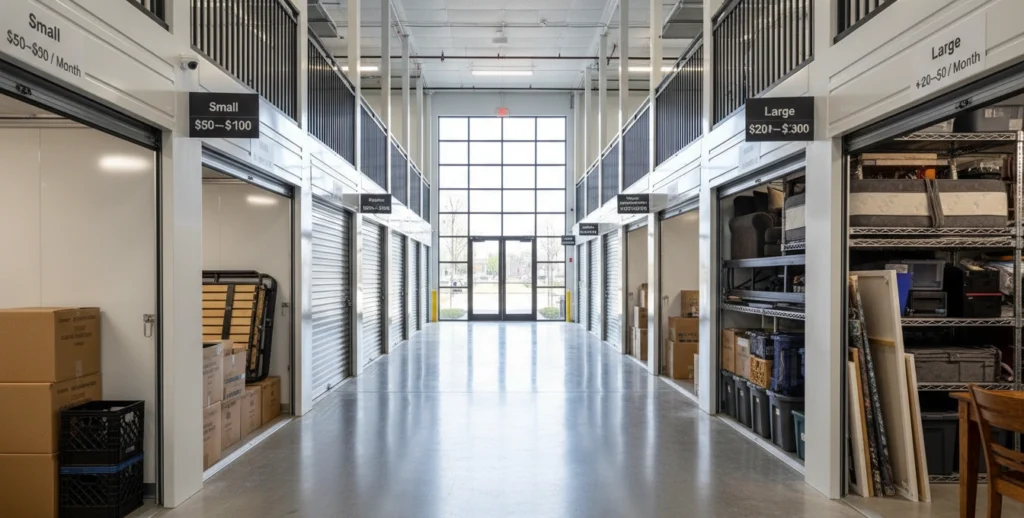
- Small Units (5×5 – 5×10): $50–$100 per month
- Medium Units (10×10 – 10×15): $100–$200 per month
- Large Units (10×20 – 10×30): $200–$300 per month
- Climate-Controlled Units: Usually $20–$50 extra per month depending on the unit
These ranges provide a general idea, but your final price will depend on your specific needs, the facility location, and any additional services you select.
Location and Its Impact on Price
The location of a storage unit plays a major role in determining monthly costs. Units in urban areas typically cost more because of limited space and higher demand, while suburban units are usually more affordable.
Accessibility also matters. Units near highways, major roads, or central areas may charge slightly more, but they offer added convenience. By selecting the right location, you can balance cost and ease of access, ensuring you don’t overspend.
Additionally, consider the safety and neighborhood of the storage facility. Units in well-secured areas with low crime rates may cost slightly higher, but they provide peace of mind for storing valuable items. Choosing a location that combines affordability, convenience, and security ensures you get the best value for your monthly payment.
Extra Features That Can Change Costs
Certain extra features in storage units can significantly increase your monthly cost, depending on what you need to store. Understanding these options ahead of time helps you make informed decisions and avoid paying for unnecessary services. By knowing which features are essential, you can plan your budget effectively while still keeping your items safe and secure.
- Climate Control: Protects sensitive items from extreme temperatures.
- Security Features: Cameras, alarms, and gated access provide extra peace of mind.
- 24/7 Access: Flexible entry can cost more than standard hours.
- Insurance & Services: Optional coverage or moving equipment may increase monthly rates.
These additional features can be very useful depending on what you plan to store. Climate control, for instance, is essential for electronics, documents, or furniture in areas with extreme weather.
Security and insurance options, while optional, ensure that your items are protected and reduce risk of loss or damage, giving you confidence in your storage choice.
Tips to Reduce Your Storage Costs
With a few smart strategies, you can lower your monthly storage fees without compromising on convenience.
- Look for promotions or discounts offered by storage facilities.
- Choose the right size unit instead of overpaying for unused space.
- Consider long-term rentals to get reduced rates.
- Compare prices from multiple providers before finalizing.
Small adjustments can make a big difference in overall cost. By planning ahead and selecting the unit and features wisely, you can maximize value and avoid unnecessary expenses.
Common Misconceptions About Storage Pricing
Many people make mistakes when estimating storage costs. Understanding common misconceptions can help you save money and make smarter choices.
- Higher cost = better quality: Expensive units aren’t always superior.
- Hidden fees don’t exist: Always check for insurance, admin, or late payment charges.
- All locations are the same: Urban units are often more expensive than suburban ones.
Even if a storage unit looks expensive, it may not offer the best value. Always review amenities and services to ensure you’re paying for what you actually need.
By knowing the truth behind these myths, you can compare units effectively, avoid unnecessary costs, and choose a storage solution that truly fits your budget.
FAQs
How much does a small storage unit cost per month?
A small unit usually costs $50–$100 per month. Prices depend on location, size, and amenities, so comparing options is recommended.
Are climate-controlled units more expensive?
Yes, climate-controlled units typically cost an extra $20–$50 per month. They are ideal for sensitive items like electronics, documents, and antiques that need temperature and humidity control.
Can I save money with long-term rentals?
Many facilities offer discounts for rentals of 6 months or more. Planning for a longer period can help reduce the overall monthly cost.
Do storage facilities charge hidden fees?
Some facilities may include insurance, admin, or late fees. It’s important to review the contract carefully to avoid unexpected costs.
Is location the biggest factor in pricing?
Yes, storage in urban areas usually costs more than suburban locations. High demand and limited space in cities make location one of the most significant pricing factors.
Conclusion
The storage unit cost per month varies depending on unit size, location, and extra features like climate control and 24/7 access. Urban units are typically more expensive, while suburban options can save money. Choosing the right size and features ensures you pay only for what you need. Long-term rentals and promotions can further reduce costs.
By understanding all factors, you can make informed decisions and select a reliable storage facility. For more tips on storage pricing and ways to save, check outaverage cost of renting a storage unit and helpful money-saving strategies.