How to Safely Store Leather Furniture in Standard Storage?
To store leather furniture in a standard storage unit, clean and condition it, wrap it in breathable cotton, lift it off the floor, and leave space for air to move. Leather is natural hide, so heat dries it out and damp air grows mold on it. A standard unit has no temperature or humidity control, which makes every one of these steps matter more. This guide covers the exact prep, wrapping, and unit setup that works for Farmington, MO weather.
Missouri summers push humidity high, and winters swing well below freezing, which is hard on sofas, recliners, and accent chairs. A leather couch left unprotected through one humid summer can pick up mildew spots, stiffness, and cracks. A few low cost steps cut that risk by a large margin. You will also see when a climate controlled unit is the safer call for your couch.
Leather Storage Risk Chart for Standard Units
| Threat | What It Does to Leather | Risk in a Standard Unit | Quick Fix |
| Heat above 85°F | Dries oils, cracks the surface | High in summer | Cotton wrap, inner unit, morning move in |
| Humidity above 60% | Mildew, musty smell, spotting | High in Missouri summers | Moisture absorbers, no plastic |
| Freezing temperatures | Stiffens hide, splits seams | Medium in winter | Condition first, move gently |
| Floor contact | Wicks up dampness from concrete | High | Pallets or boards under legs |
| Dust and pests | Scratches, nibbled cushions | Medium | Clean fully, seal boxes nearby |
| Direct sunlight | Fading and dry patches | Low inside a unit | Cotton cover over every piece |
Why Leather Reacts Badly to Storage Conditions
Leather behaves like skin. It needs steady moisture and mild temperatures to stay soft.
Heat and Cold Damage
Hot air pulls natural oils out of the hide, which leaves it dry and brittle. Cold makes leather stiff, and bending stiff leather during a move can split seams. Sudden swings between the two are the worst.
Humidity and Mold Risk
Leather stays healthiest at 40 to 50 percent relative humidity. Mold starts to grow when humidity sits above 60 percent for long stretches, and Missouri summers often pass that mark. Wooden frames and legs face the same threat, so read how to prevent mold on wooden items in storage units before you pack.
Prep Work Before Furniture Storage
Good prep decides how the leather looks when you unpack it. Spend an afternoon on it.
Clean the Leather Sofa Fully
Vacuum the seams with a soft brush attachment. Wipe the surface with a microfiber cloth and a pH balanced leather cleaner. Let it air dry for 24 hours, because trapped body oils and dirt feed mildew.
Condition With a Light Hand
Apply a thin coat of water based leather conditioner and buff off the extra. A heavy coat attracts dust and holds moisture. Test a small hidden spot first, since aniline leather can darken, and skip conditioner on suede or nubuck.
Take the Furniture Apart
Remove legs, cushions, and detachable arms. Smaller pieces load easier and put less stress on the frame. Photograph the assembly and keep screws in a labeled bag taped inside a cushion cover.
How to Store Leather Furniture Step by Step
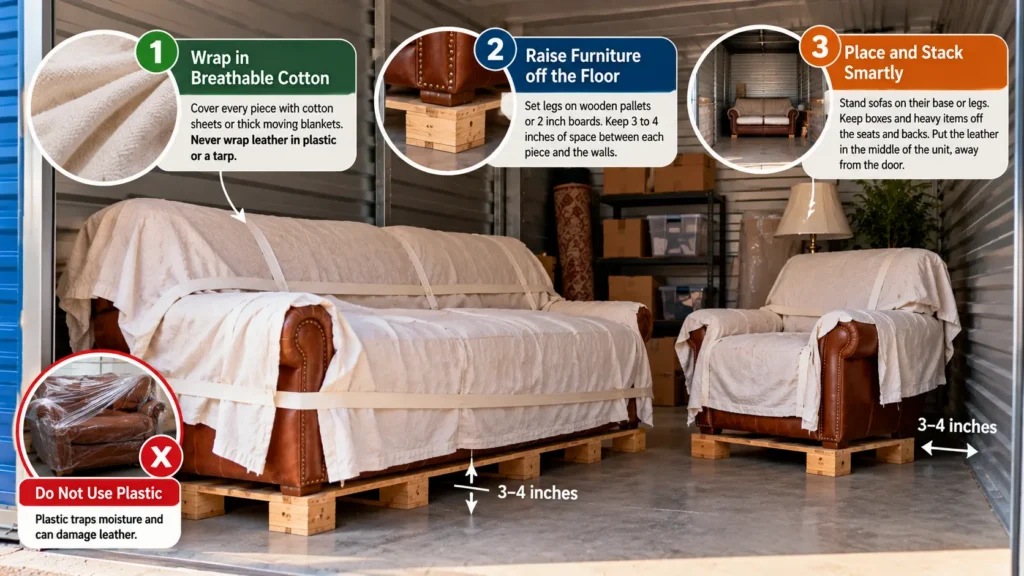
Follow these three steps in order. Each one blocks a specific type of damage.
Wrap in Breathable Cotton
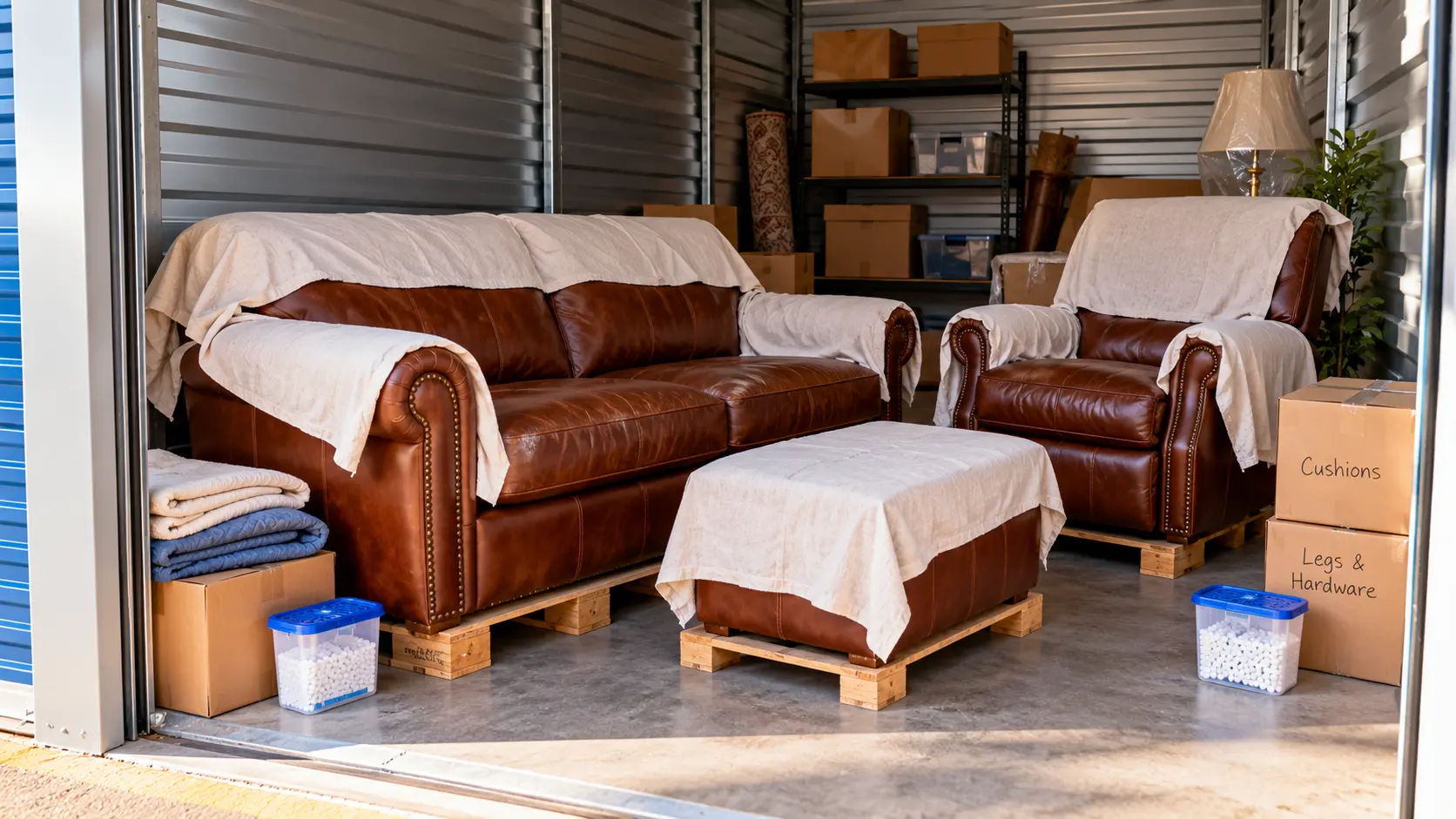
Cover every piece with cotton sheets or thick moving blankets. Never wrap leather in plastic or a tarp. Plastic traps moisture against the hide and can leave sticky marks. Hold the wrap with soft cloth strips instead of tape.
Raise Furniture Off the Floor
Set legs on wooden pallets or 2 inch boards. Concrete releases dampness that soaks into leather and wood. Keep 3 to 4 inches of space between each piece and the walls.
Place and Stack Smartly
Stand sofas on their base or legs. Keep boxes and heavy items off the seats and backs, because pressure leaves permanent dents and creases. Put the leather in the middle of the unit, away from the door, where air changes less.
Standard Storage Unit Setup for Leather
A standard unit can work for short stays. For anything longer than three months, store leather furniture in Farmington, MO inside a unit with regulated conditions.
Airflow and Moisture Control
Leave a small aisle so air can move around each piece. Place calcium chloride moisture tubs or silica gel packs near the furniture and swap them when full. If you are also packing paper goods, see how to store books in non climate controlled storage so your boxes do not add moisture.
Summer and Winter Tips for Farmington MO
Load in the early morning during summer, when the air is coolest. In winter, let frozen leather warm up before you bend or carry it. Choose an inner unit when you can, and visit every 4 to 6 weeks to check for odor, damp spots, and pests.
When Climate Controlled Storage Makes Sense
Standard units cost less, but they cannot hold steady conditions. Some leather needs more protection than a cotton sheet can give.
Signs Standard Storage Falls Short
Pick controlled conditions if any of these apply:
- You will keep the furniture through a full Missouri summer
- The piece is aniline or semi aniline leather
- The sofa is an heirloom, antique, or costly set
- The storage stay will pass three months
Temperature and humidity control stop most of the damage listed in the chart above. Many people choose climate controlled storage units in Farmington Missouri for exactly this reason.
Local Options Around Farmington
D Highway Storage offers standard, drive up, and climate controlled units on Hwy D in Farmington. If you want temperature controlled storage close to Farmington for a couch or recliner, ask the on site manager which size fits. Furniture resellers can also learn why a non climate controlled unit works for reselling when stock turns over fast.
Common Mistakes That Ruin Leather Couches
Most damage comes from avoidable habits. Many people store leather furniture without a plan and open the door months later to mildew.
- Wrapping leather in plastic or shrink wrap
- Packing furniture tight against walls
- Skipping the cleaning step
- Using heavy conditioner right before sealing the unit
- Setting legs directly on bare concrete
- Never checking the unit during the stay
FAQs
Can leather furniture go in a non-climate controlled storage unit?
Yes, clean, cotton wrapped leather lifted off the floor can sit in a standard unit for a short stay of about three months. Longer stays or hot Missouri summers raise the risk of mildew and cracking.
Is it okay to cover leather furniture with plastic?
No, plastic traps moisture against the hide and can cause mold, odor, and sticky spots. Use breathable cotton sheets or moving blankets instead.
How long can leather furniture stay in storage?
A prepared leather sofa handles about three months in a standard unit if the air stays dry. For six months or more, a climate controlled unit is the safer choice. Check the furniture every 4 to 6 weeks either way.
Should I condition leather before putting it in storage?
Yes, apply a thin coat of conditioner a day before wrapping so the hide stays soft and flexible. Test a small spot first and skip it on suede.
Protect Your Leather in Farmington
Leather lasts for decades when it gets clean surfaces, breathable wrapping, and dry air. When you store leather furniture in a standard unit, the prep work does most of the protecting. Skip the plastic, lift every piece off the concrete, and check your unit each month. These habits keep cracks, mildew, and fading away.
Long stays and hot Missouri summers call for a stronger plan. Climate controlled storage gives leather steady temperature and humidity all year. D Highway Storage has standard, drive up, and climate controlled units on Hwy D to match your timeline. Pick the unit that fits your furniture, and reserve it before your move date.