
How Do You Store Books in a Non Climate Controlled Storage?
To store books in a non climate controlled storage unit, pack them flat in lidded plastic bins with silica gel packets, raise the bins off the floor, and keep the unit closed and dry. This setup blocks moisture, dust, and pests when you cannot control the temperature inside the unit. In Farmington, Missouri, humid summers and freezing winters push a standard unit through big swings in heat and moisture. Paper reacts fast to those swings, so your prep work matters more than the unit itself.
Paperbacks, textbooks, and everyday novels can handle a standard unit for a few months when you prep them well. Rare editions, leather bound sets, and signed copies belong in climate controlled storage in Farmington MO instead. Below, you get a risk chart, a step by step packing method, and a layout plan for your unit. You also learn when the extra cost of climate control is worth paying.
Book Storage Risk Chart for Standard Units
| Book Type | Standard Unit Safe? | Best Prep | Upgrade to Climate Control? |
| Paperbacks | Yes, up to 6 months | Lidded bin, silica gel | Not needed for short stays |
| Hardcover novels | Yes, up to 6 months | Pack flat, wrap dust jackets in acid free tissue | Only for long stays |
| Textbooks and manuals | Yes, up to 6 months | Small book boxes, light loads | Rarely |
| Comics and magazines | Risky | Backing boards, sealed bin | Yes, past 3 months |
| Photo albums and scrapbooks | Risky | Acid free sleeves, sealed bin | Yes |
| Leather bound and antique books | No | Not recommended | Yes |
| First editions and signed copies | No | Not recommended | Yes |
Time limits are general guides. Your results depend on the weather and how well the books are sealed.
What Heat, Moisture, and Pests Do to Books
Humidity and Mold Growth
Books stay healthiest at about 60 to 70°F and 30 to 50 percent relative humidity. A standard unit cannot hold those numbers. When the air cools at night, water vapor condenses, and paper soaks it up.
If you store books in a non climate controlled storage unit through a Farmington summer, moisture is your biggest threat. Mildew shows up as musty smells, brown spots called foxing, and stuck pages.
Heat, Cold, and Warping
Dry heat cracks leather spines and makes glue brittle. Swings from cold to hot make pages wave and curl.
Metal doors and outer walls pass these swings straight to whatever sits beside them.
Pests and Dust
Silverfish and roaches eat paper, paste, and cloth bindings. Dust holds moisture against pages and leaves stains.
Sealed bins and a clean unit cut both problems.
Steps to Store Books in a Non Climate Controlled Storage
Sort and Clean Each Book
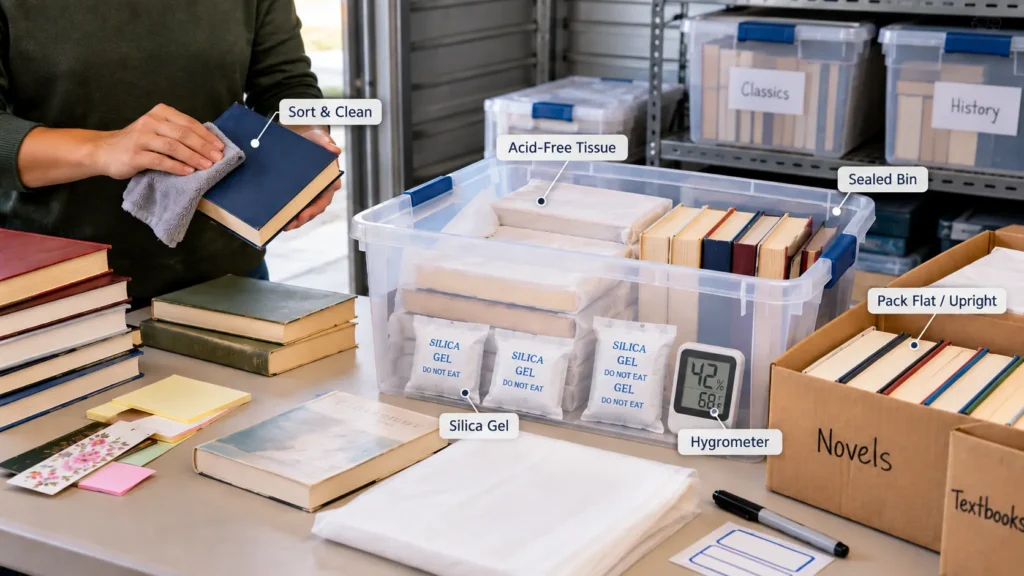
Start with clean, fully dry books. Damp books trapped in a bin grow mold within weeks.
- Remove loose papers, sticky notes, and bookmarks.
- Wipe covers with a dry microfiber cloth.
- Air dry any book that feels damp.
- Set aside books with mold spots. Do not pack them with clean ones.
Choose Acid Free Boxes and Sealed Bins
Acid free and lignin free boxes stop chemicals from leaching into pages. Hard plastic bins with tight lids add a barrier against humidity and pests.
Skip plastic bags, because they trap moisture against the paper. Skip rubber bands too, since they leave permanent dents in covers. Wrap collectible books in acid free tissue before they go into a bin.
Add Silica Gel and a Hygrometer
Place several silica gel packets in each bin to absorb stray moisture. Swap them out every few months, since used packets stop working.
A small hygrometer shows the humidity level inside a bin or on your shelf. If it reads above 50 percent, add more packets or move the books to a drier spot.
Pack Flat and Keep Weight Safe
A medium moving box full of books can weigh 30 to 50 pounds. Use small book boxes so you can lift them without dropping or crushing anything.
Lay large and fragile books flat. Stand regular books upright with snug spacing, and never force them in. Label every box by category or author.
Unit Layout for Book Storage in Farmington
Shelving and Pallets Keep Books Off the Floor
Put bins on metal shelving or pallets so air moves underneath. Floors collect condensation and the occasional puddle after heavy rain.
You can store books in a non-climate controlled storage unit safely only when nothing touches the floor or the outer walls. Keep heavy boxes on low shelves and lighter ones on top. Leave a small gap around the stack for airflow.
Best Unit Size for Book Collections
Book boxes stack tightly, so a small unit often works. A 5×5 can hold a solid home library, a 5×10 fits a bigger collection, and a 10×10 suits thousands of volumes with room to organize.
Talk with the on site team at our self storage facility in Farmington, MO to match the size to your collection.
Short Term Storage for Books
Moving between apartments or clearing a dorm room? You can rent a storage unit for a week and keep your books exposed to weather for as little time as possible.
Short stays lower the risk, especially outside July and August.
Climate Controlled Storage in Farmington for Valuable Books
Some books should skip the standard unit entirely. Choose climate control when your collection includes:
- Rare, signed, or first edition copies
- Leather, vellum, or antique bindings
- Family Bibles, yearbooks, and photo albums
- Any books you plan to store for more than six months
D Highway Storage offers Farmington climate controlled units with regulated temperature and humidity, 24/7 video surveillance, and gate access codes.
Cost Versus Protection
Climate control costs more each month. Compare that gap against what your books are worth, and check the average monthly cost of self storage before you decide.
A shelf of used paperbacks rarely justifies the upgrade. A signed first edition almost always does.
Other Sensitive Items in Your Unit
Reading lamps, tablets, and ebook readers face the same humidity risk as paper. Follow this guide to store electronics in a storage unit without damage if they share space with your books.
FAQs
Can books be stored in a non climate controlled storage unit?
Yes, paperbacks and textbooks can stay for a few months in sealed bins with silica gel. For a year or more, choose a climate controlled unit.
What temperature and humidity are best for books?
Aim for 60 to 70°F and 30 to 50 percent relative humidity. A standard unit in Missouri will swing past those numbers. Sealed bins and silica gel narrow the gap but do not close it.
Should you put books in plastic bags for storage?
NO. Plastic bags trap moisture and lead to mildew. Use acid free tissue for wrapping and hard bins with lids for packing.
How long can books stay in a standard storage unit?
Most everyday books do fine for three to six months when prepped well. Summer is the hardest stretch in Farmington, so check the humidity more often then.
Conclusion
Now you know how to store books in a non climate controlled storage unit without risking mold, warped covers, or pest damage. Sort every book, wrap the special ones in acid free tissue, and seal the bins with silica gel. Keep everything off the floor and away from the door and outer walls. Check the unit every couple of months with a hygrometer and replace used packets.
Valuable collections deserve more than good habits, and temperature controlled storage units in Farmington remove the guesswork. D Highway Storage at 2079 Hwy D offers regulated conditions, 24/7 video surveillance, and flexible rental terms. You can reserve online or visit the on site manager for help with unit size. Move your books in on a dry day, and they will look the same when you take them out.