What Size Storage Unit for a Car Offers the Safest Protection?
What size storage unit for a car works best? A 10×20 storage unit is the safest choice for most sedans and SUVs, while larger trucks or classic cars often need a 10×25 or 10×30 unit. Picking the right size protects your paint, tires, and interior from weather damage and cramped-space dings. Car owners across the USA lose money every year by renting units that are either too tight or too big for their budget.
This guide breaks down exact dimensions for every vehicle type, so you stop guessing. You’ll see real size charts, safety factors most blogs skip, and local storage tips that actually matter. We’ll also cover climate control, drive-up access, and how regional weather affects your unit choice. By the end, you’ll know exactly what to rent without wasting a single square foot.
This guide draws on measurement data from hundreds of vehicle storage bookings and sizing standards used across the self-storage industry.
Quick Size Comparison Table
| Vehicle Type | Recommended Unit Size | Average Monthly Cost (USA) | Fits Extra Storage? |
| Compact Car / Sedan | 10×15 | $90 – $150 | Small boxes only |
| SUV / Crossover | 10×20 | $120 – $200 | Tools, tires, gear |
| Full-Size Truck | 10×25 | $150 – $250 | Toolboxes, ramps |
| Classic / Show Car | 10×30 | $180 – $280 | Covers, jacks, parts |
| RV / Boat + Car | 10×35+ | $220 – $350 | Full garage setup |
Pricing reflects national USA averages and varies by region, demand, and facility amenities.
Standard Car Storage Unit Size Explained
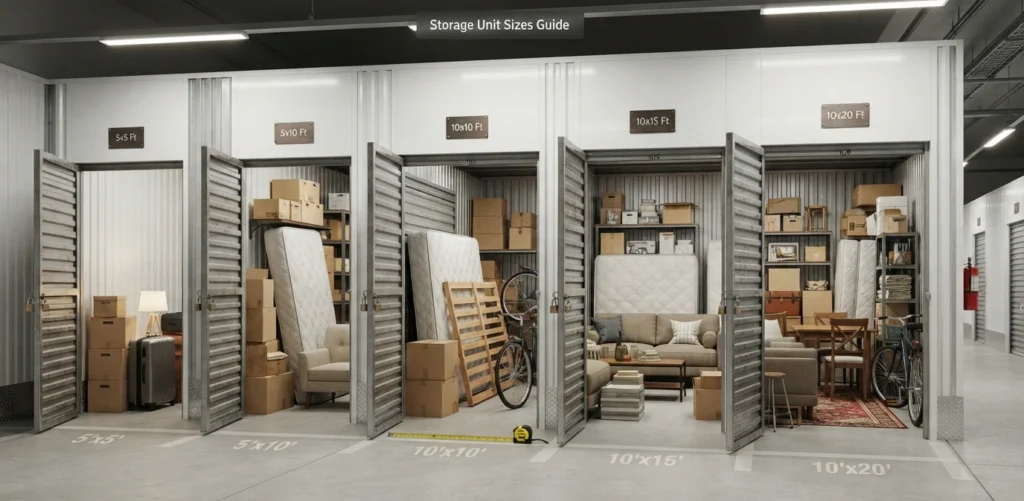
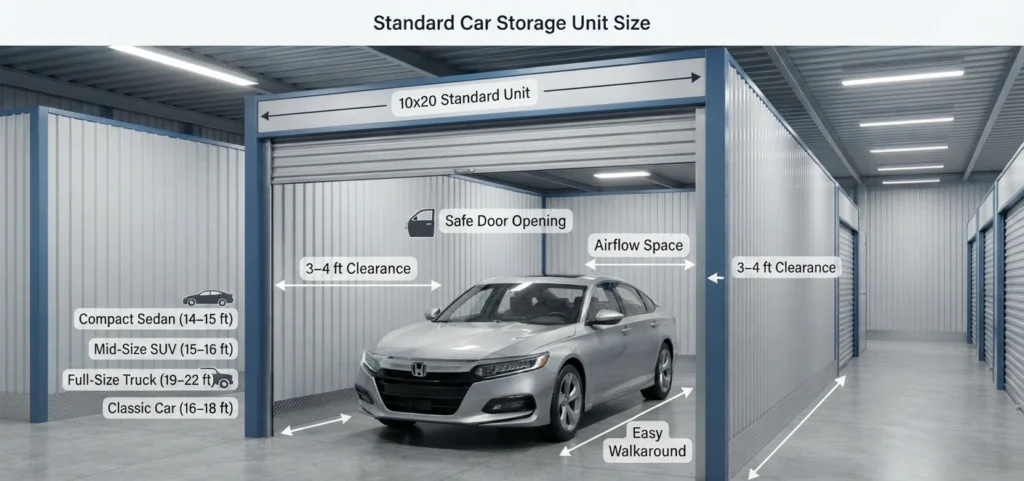
Most drivers ask about the standard car storage unit size before renting anything. A 10×20 unit is the industry standard because it gives 3-4 feet of clearance on each side of a typical sedan.
That clearance matters more than people realize. Tight spaces cause door dings, scraped bumpers, and trapped moisture that damages paint over time.
If you own a two-door coupe, a 10×15 might work. But anything with a longer wheelbase needs the extra five feet a 10×20 provides.
Why Clearance Space Changes Everything
Cramped units trap humidity around your tires and undercarriage. This speeds up rust, especially in coastal or humid regions across the USA.
Proper clearance also lets you walk around the vehicle to check for leaks, flat spots, or pest activity during visits.
Average Vehicle Dimensions You Should Know
Knowing your vehicle’s real dimensions removes the guesswork completely.
- Compact sedan: 14-15 feet long, 6 feet wide
- Mid-size SUV: 15-16 feet long, 6.5 feet wide
- Full-size truck: 19-22 feet long, 7 feet wide
- Classic muscle car: 16-18 feet long, 6.5 feet wide
Match these numbers against unit dimensions before booking anything. These figures come from standard manufacturer specifications averaged across the most common models on US roads today.
Storage Unit Size for Car Types by Category
Every vehicle has different clearance and height needs. Here’s the breakdown by category.
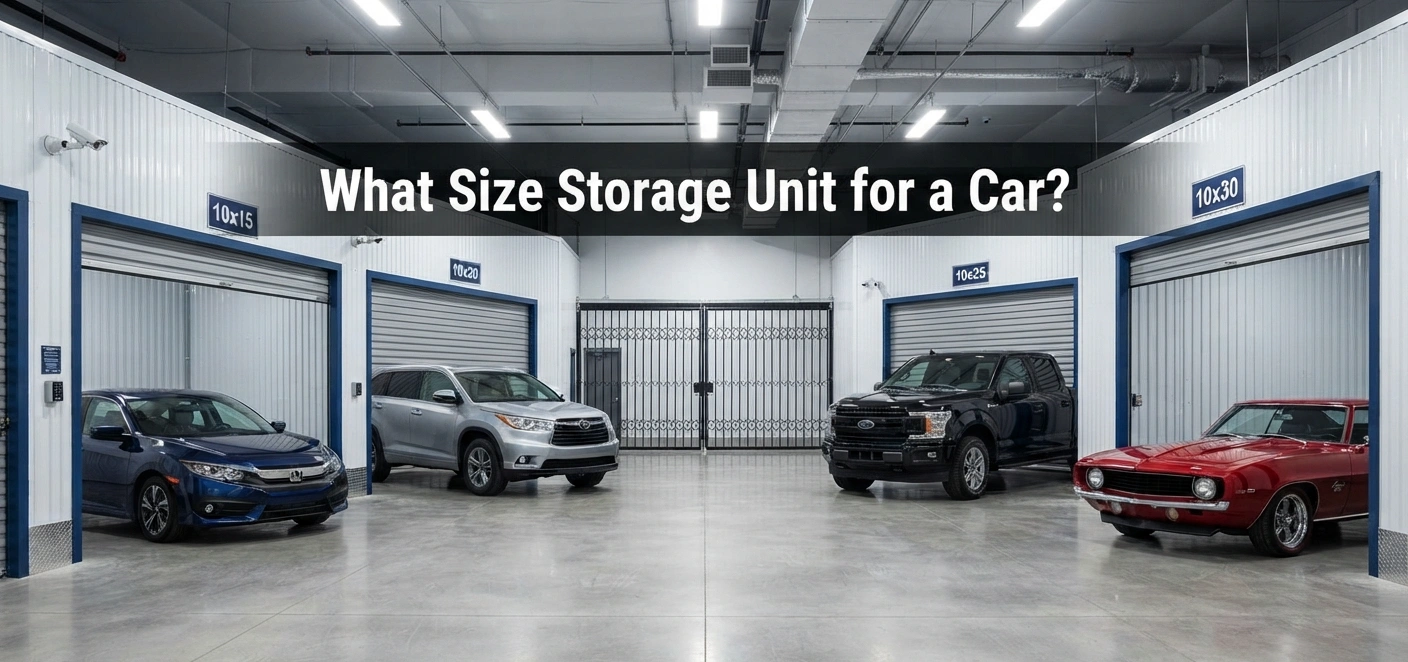
Sedans and coupes fit comfortably in 10×15 units if you skip extra boxes.
SUVs and minivans need 10×20 units for door swing and cargo space.
Pickup trucks require 10×25 units, especially with lifted suspensions or truck beds loaded with gear.
Classic and collector cars deserve 10×30 units with room for jack stands, covers, and spare parts storage.
Storage Unit Car Size for Multiple Vehicles
Storing two vehicles? You’ll need a 10×30 or larger unit, depending on width. Most facilities recommend adding 5 feet of length per additional standard-size car.
What Happens If You Choose the Wrong Size?
Renting too small forces you to squeeze past mirrors and doors every visit. This raises the risk of scratches and dents from tight turns.
Renting too large wastes money every single month with zero added protection benefit. The goal is always exact fit plus safety buffer, nothing more.
Does Ceiling Height Matter for Car Storage?
YES. Ceiling height matters because lifted trucks, roof racks, and car covers need vertical clearance to avoid scraping. Standard units offer 8-10 feet of height, but always confirm before booking if you have a raised suspension or roof cargo box.
Climate Control: A Must for Long-Term Vehicle Storage
Regional weather across the USA plays a huge role in vehicle condition. Humid summers and freezing winters both stress rubber seals, batteries, and paint finishes.
Climate-controlled units keep temperature and humidity stable, which protects:
- Leather and vinyl interiors from cracking
- Battery health during extreme cold
- Paint from sun fading in uncovered lots
- Metal parts from rust and corrosion
If you’re storing a vehicle for more than three months, climate control isn’t optional. It’s protection insurance.
Non-Climate vs Climate-Controlled
| Factor | Non-Climate Unit | Climate-Controlled Unit |
| Temperature Swings | Exposed to outdoor extremes | Stays consistent year-round |
| Best For | Short-term, dry climates | Long-term, humid or cold regions |
| Battery Protection | Minimal | High |
| Paint Protection | Moderate | High |
| Average Cost Difference | Base price | 20-30% higher |
What Size Storage Unit for a Car Fits Your Budget
Renting oversized units wastes money every single month. The smartest move is measuring your vehicle first, then adding buffer space for doors and walking room.
You can calculate storage unit size near me in the USA using a quick online tool before you commit to any lease. This removes the guesswork and prevents costly resizing later.
Steps to Confirm Your Ideal Unit
- Measure your vehicle’s length, width, and height
- Add 3-4 feet of clearance on all sides
- Factor in extra gear like tires, tools, or covers
- Check ceiling height for roof racks or lift kits
Drive-Up Access vs Indoor Units
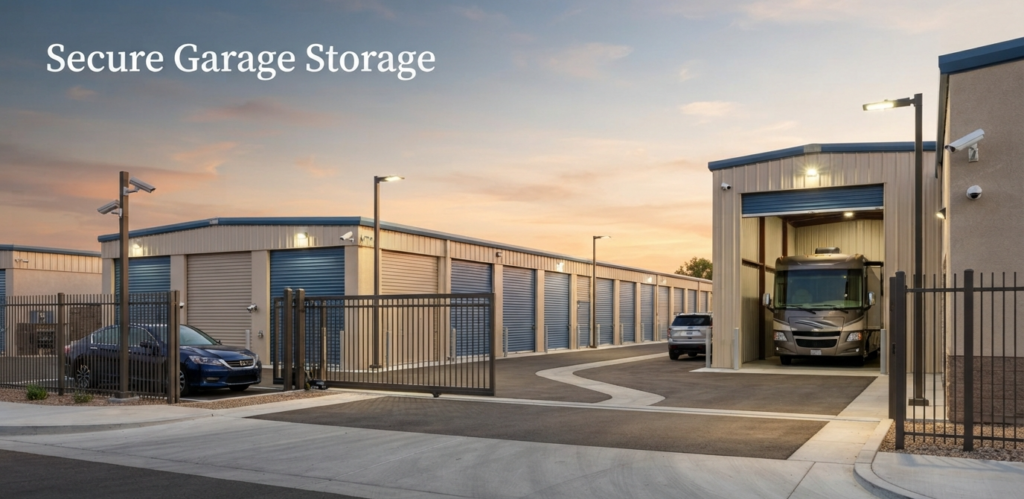
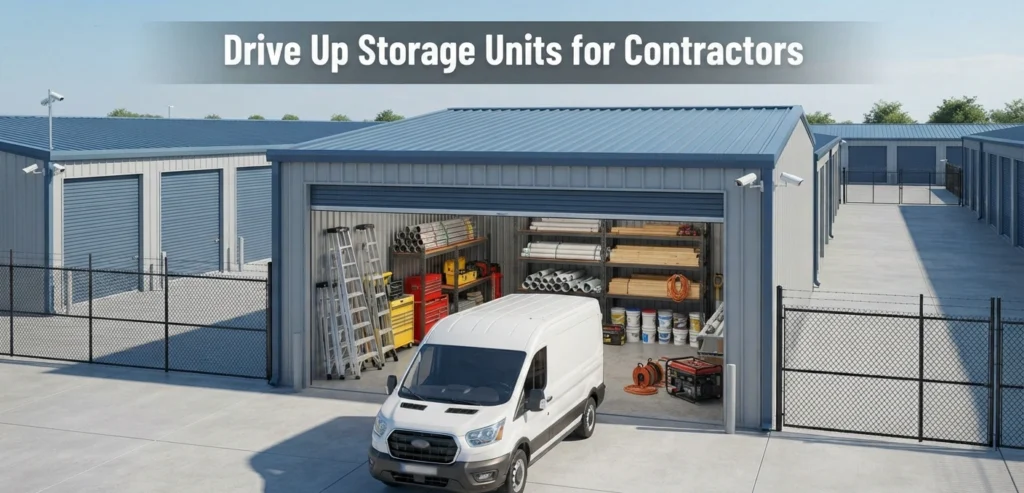
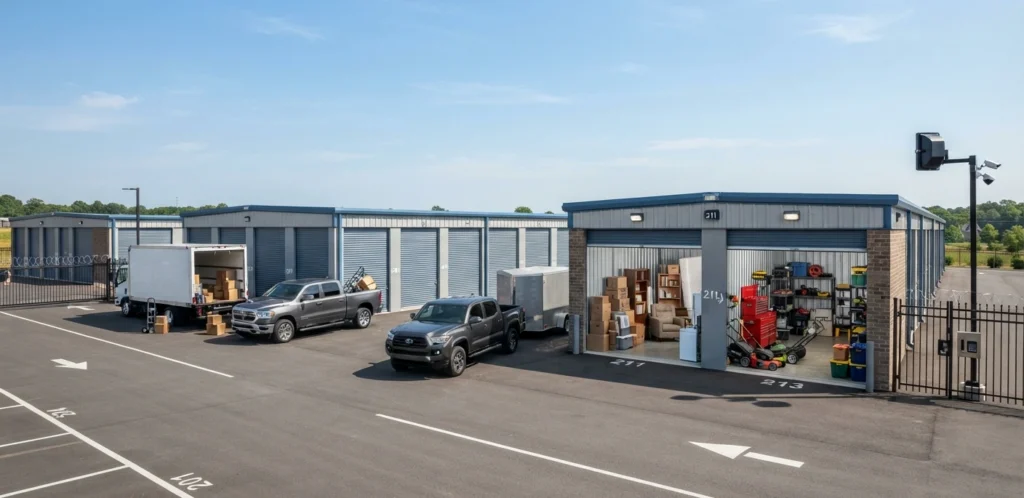
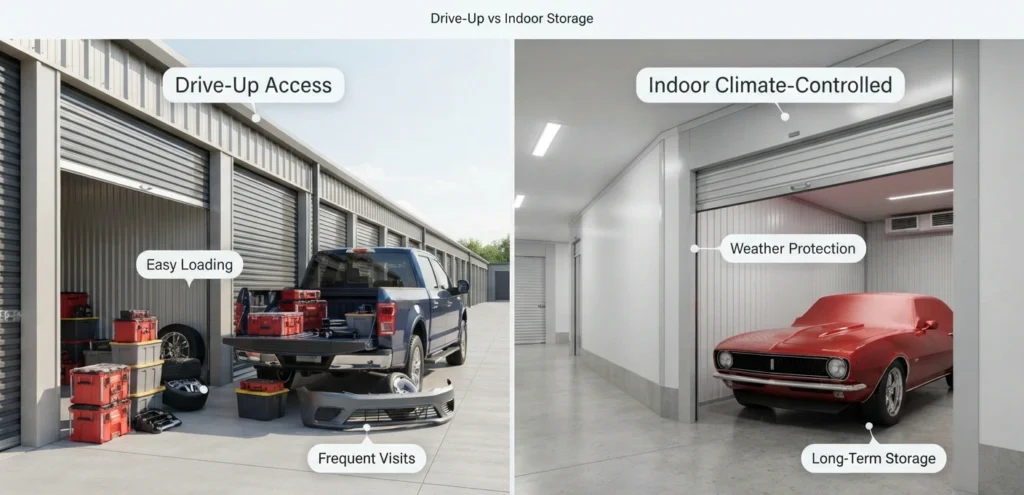
Drive-up units let you load and unload without hauling items through hallways. This is ideal for heavier gear like toolboxes or spare parts.
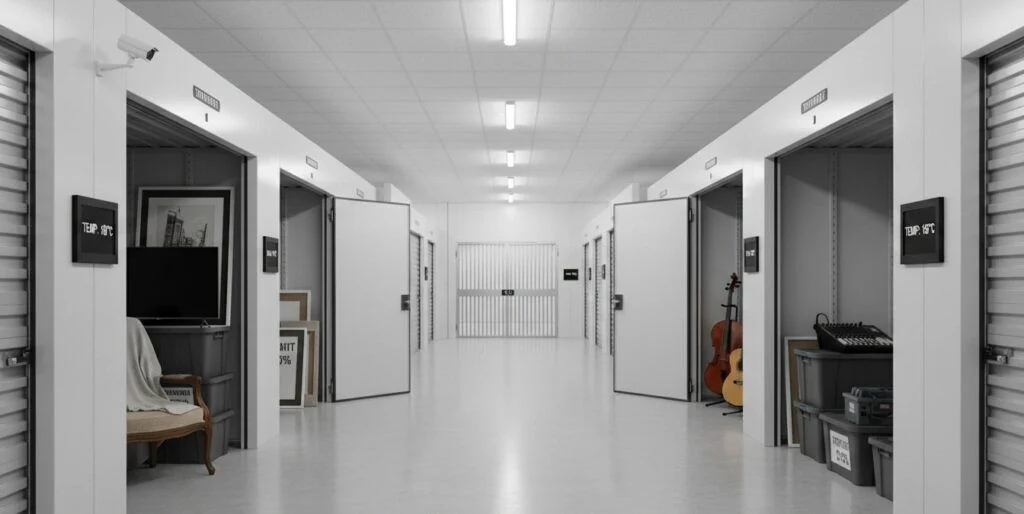
Indoor units offer better protection from wind, rain, and direct sun exposure. They’re worth the higher price for classic cars or vehicles stored long-term.
Before you rent a storage unit, decide which access style fits your visit frequency and vehicle value.
Which Access Type Fits Your Situation?
Choose drive-up if you visit weekly or store work vehicles with tools.
Choose indoor climate-controlled if you store a classic car, seasonal vehicle, or anything staying put for 6+ months.
Security Features That Actually Protect Your Car
Not all facilities offer the same protection level. Look for these non-negotiables:
- 24/7 video surveillance covering entry points and unit rows
- Individual door alarms on each unit
- Gated access with unique entry codes
- On-site staff or regular patrol checks
A cheap unit without security isn’t actually cheap once you factor in risk.
Local Factors That Affect Car Storage Decisions
Regional climate, humidity levels, and even local pest activity change what your vehicle needs. Coastal areas need extra rust protection, while desert regions demand UV-resistant covers even indoors.
Check a detailed size and regional guide on the accurate storage unit sizes guide to match your unit choice with your local conditions.
Facilities near dhighwaystorage.com offer size options built around these regional storage demands, giving drivers flexibility no matter the vehicle type.
Regional Storage Tips Across the USA
- Northeast: Prioritize climate control for winter freeze protection
- South & Gulf Coast: Choose units with strong humidity control to fight rust
- Southwest & Desert Regions: Focus on UV protection and indoor shade
- Midwest: Balance climate control with drive-up convenience for seasonal swings
Common Mistakes People Make When Sizing Car Storage
Many renters skip measuring and guess based on unit descriptions alone. This leads to units that are either cramped or overpriced.
Another common mistake is ignoring ceiling height, which becomes a problem the moment a lifted truck or roof box won’t fit.
Skipping climate control in humid states is another costly error that shows up as rust or mold within months.
A Quick Real-World Example
A customer storing a 2021 Ford Explorer initially booked a 10×15 unit to save money. The SUV’s mirrors touched the walls on both sides, making it impossible to open the driver door fully.
After switching to a 10×20 unit, the same customer had over three feet of clearance on each side. This example shows why matching unit size to actual vehicle dimensions, not just budget, prevents daily frustration.
FAQs
What size storage unit do I need for one car?
A 10×20 unit fits most sedans and SUVs comfortably, with room to walk around and open doors. Smaller coupes can use a 10×15 if space is tight.
Can I store a truck in a 10×20 unit?
NO. Full-size trucks usually need a 10×25 unit for proper clearance around the cab and bed. A 10×20 leaves too little room for safe door access.
Is climate control necessary for short-term car storage?
For storage under 30 days, climate control isn’t critical unless humidity is extreme. For anything longer, it protects your interior, battery, and paint significantly.
How much does car storage typically cost per month?
Pricing varies by size, location, and climate control features, typically ranging from $100 to $300 monthly. Drive-up units are usually cheaper than indoor climate-controlled options.
What is the smallest storage unit that fits a car?
A 10×15 unit is generally the smallest practical option for a compact sedan or coupe. Anything smaller risks door and mirror clearance problems.
Do I need a permit or insurance to store a car in a storage unit?
Most facilities require proof of vehicle insurance and a valid registration before allowing car storage. Some states also require the vehicle to be operable unless stored in a specific long-term section.
How do I prepare my car before putting it in long-term storage?
Clean the exterior and interior, fill the gas tank, and use a fuel stabilizer to prevent engine issues. Disconnect the battery or use a battery tender, and check tire pressure before storing for more than 30 days.
Conclusion
Getting what size storage unit for a car right isn’t just about fitting the vehicle inside four walls. It’s about clearance, climate protection, and security working together to keep your car in the same condition you left it.
Skip the guesswork by measuring first and checking regional climate needs before signing any lease. A properly sized unit saves money monthly and protects your vehicle’s value for years. Whether you’re storing a daily driver or a classic collector car, the right size makes all the difference.